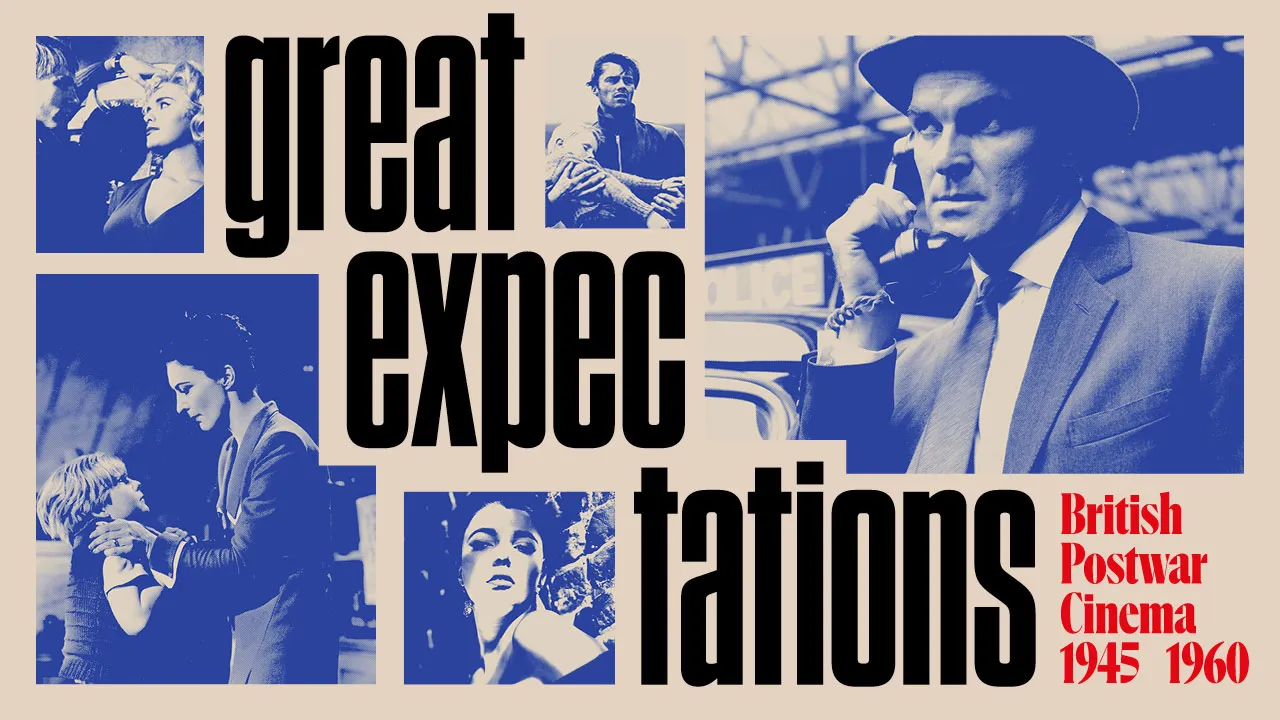
The Great Expectations season is underway at BFI Southbank. The Financial Times’ Henry K Miller has penned a fine piece about this smaller selection from a British postwar cinema retrospective of the same name, originally curated for the Locarno Film Festival (August 2025), where the full 45-film programme premiered. He asked me several questions before publishing his piece, and I reproduce my responses here to provide further clarity about the nature of the season and its origins. This was an email exchange.
Sunday, 10 May 2026
Saturday, 9 May 2026
Il Cinema Ritrovato 2026: Easy Living with Mitchell Leisen
![]() |
| Mitchell Leisen showing Ray Milland how to kiss Jean Arthur. Publicity set photo from Easy Living (1937) |
Easy Living with Mitchell Leisen
In a light, sophisticated no-man’s-land (yes, largely inhabited by women) between romantic comedy, screwball, and pure Paramount aestheticism, the cinema of Mitchell Leisen comes to life. A former silent-era costume and set designer, Leisen became renowned for classics such as Easy Living, Hold Back the Dawn, and Midnight, and was the only Hollywood director to sign his name in his films’ credits. No auteur theory was needed to recognise his unmistakable qualities: an effortless narrative flow, impeccable design, and sparkling, innuendo-laced dialogue – sometimes written by Preston Sturges, Billy Wilder, or Charles Brackett – alongside heroines as charming as they were uncompromising. In his films, Carole Lombard, Claudette Colbert, Barbara Stanwyck, and Jean Arthur radiated wit, grace, and razor-sharp comic timing. They twisted conventions as their encounters with men – often played by Ray Milland or Fred MacMurray – spiralled from mishap to romantic resolution. This Il Cinema Ritrovato tribute presents a selection of Leisen’s classics in restored versions (courtesy of Universal), alongside rarely screened archival prints.
Thursday, 26 March 2026
Red and Black: Hollywood Left and the Blacklist
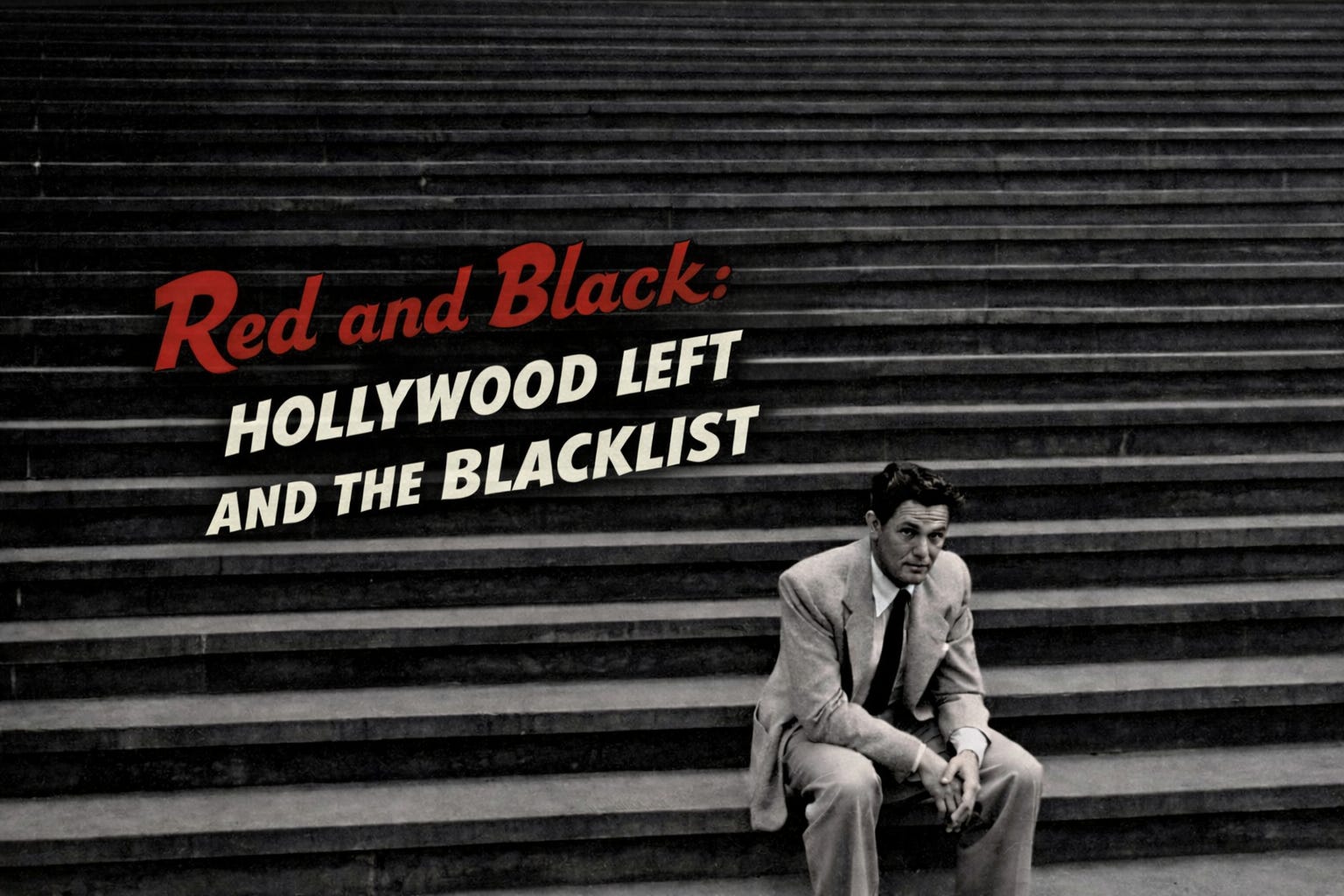
Red and Black: Hollywood Left and the Blacklist is the title and the theme of the upcoming retrospective I have curated for the 79th edition of Locarno Film Festival in Switzerland.
The retrospective presents not only the key titles of the blacklist period but also traces the wartime origins of concern over communist infiltration in Hollywood and its international aftermath. The programme features nearly 50 titles, including feature films, shorts, documentaries, newsreels, and animation.
This retrospective differs from previous surveys of the same subject in three ways:
Sunday, 21 December 2025
Masterpieces of the Iranian New Wave, Part II at the Barbican, London
![]() |
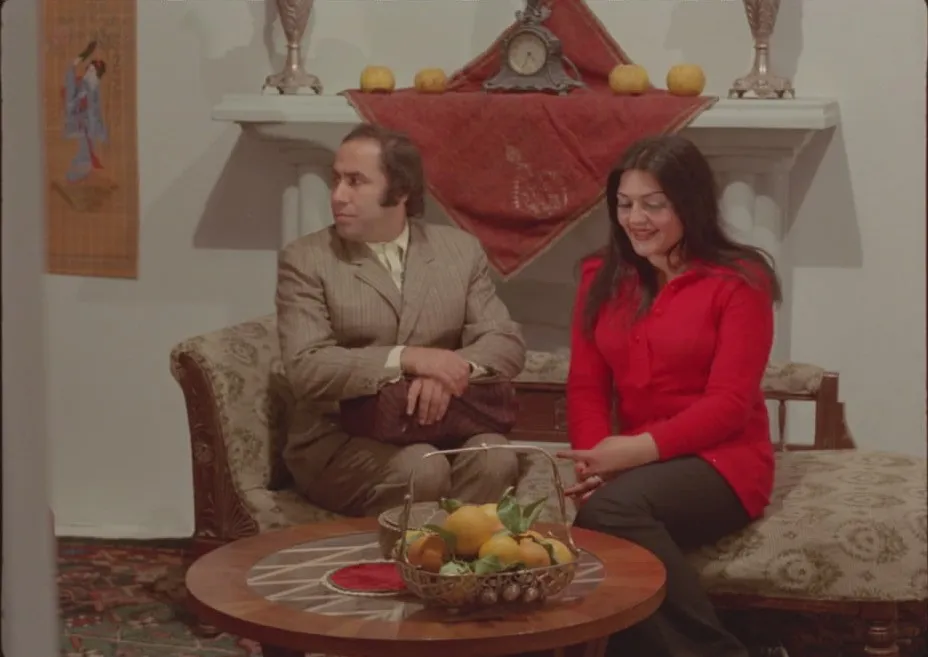
| Secrets of the Jinn Valley Treasure |
Following the Barbican Centre’s sell-out programme Masterpieces of the Iranian New Wave in February 2025, the second part will present an even richer array of rare cinematic gems, many of them never before seen in the UK.
Featuring numerous new restorations, this expanded foray into the classics of Iranian cinema that first brought worldwide admiration to the nation’s film culture will include the world premiere of the newly restored director’s-cut version of Ebrahim Golestan’s satirical film Secrets of the Jinn Valley Treasure. Starring Parviz Sayyad, Mary Apick, and Shahnaz Tehrani, this long-unseen version has been restored by Cineteca di Bologna in partnership with the Iran Heritage Foundation.
Monday, 1 December 2025
Athens Avant-Garde Film Festival | Restored section's introduction and notes
Introduction to and programme notes for the "restored and beautiful" section at the 14th Athens Avant-Garde Film Festival, December 2025. — EK
The films in this section, spanning six formative decades of cinema history, start and end in the Middle East, offering a sense of the resilience of its people. The canonical documentary masterpiece Grass (1925) follows three Americans traveling among the nomadic tribes of Iran, while Ghazl El-Banat (1985) adopts an insider’s point of view in which the great Arab filmmaker Jocelyne Saab gently removes the shrapnel from the wounded body of her hometown, Beirut.
If Ghazl El-Banat is its director’s finest work, then Craig’s Wife (1936) is the masterpiece of American director Dorothy Arzner. A tale of a toxic lady of the house, no melodrama has so precisely and exhilaratingly explored the intertwined themes of house, territory, and power.
Saturday, 26 July 2025
Great Expectations at the Cinémathèque suisse [in French]
![]() |
| Pool of London |
Sélection de films britanniques d'après-guerre (1945-1960), en partenariat avec le Festival du film de Locarno à la Cinémathèque suisse.
Avec une rétrospective titrée Great Expectations, le Locarno Film Festival présente, cette année, 45 films britanniques réalisés entre la fin de la Seconde Guerre mondiale et 1960. Dès sa première édition, le festival avait manifesté un réel intérêt pour le cinéma britannique et avait décerné son prix principal à Hunted (1952) de Charles Crichton. La sélection de Locarno – dont plusieurs titres soigneusement choisis seront projetés à Lausanne – célèbre les années marquantes et l’âge d'or du cinéma britannique.
Monday, 19 May 2025
Ida Lupino: The Best of Her Television Work
My selection of Lupino's TV work as a director will play at Close-Up Cinema on May 25. – EK
The London-born Hollywood movie star Ida Lupino, known as one of the screen’s 'tough girls', found acting insufficient for her intellectual and social ambitions. In 1949, she ventured into directing, “investigating the social condition of women in contemporary society.” With Dorothy Arzner retired, Lupino became the only active female director in Hollywood at the time. Her remarkable directorial output has been restored and widely screened in recent years. However, her rich, and fascinating body of work for television – usually individual episodes within ongoing series – remains largely unexplored. These works encompass proto-feminist stories, genre pieces, and tightly knit dramas. This programme features some of Lupino’s most outstanding television work from the 1950s and 1960s.
Friday, 11 November 2022
How to Make a Retrospective
![]() |
| My Six Convicts by Hugo Fregonese. Still (c) Cineteca di Bologna |
The talk How to Make a Retrospective will be given at the BFI Southbank, London as part of the Archive Screening Days 2022 (organised by Independent Cinema Office) on December 8, 2022.
What are the challenges and methods needed to bring cinema history to life? How can we frame a body of work so it can be shared more widely? In this wide-ranging presentation, filmmaker, film curator and writer Ehsan Khoshbakht demonstrates the process of mounting a major retrospective. In 2022, Il Cinema Ritrovato in Bologna – the world’s largest archive film festival – delivered a retrospective of director Hugo Fregonese. A neglected figure in Hollywood but with a history spanning his home country of Argentina as well as UK, Spain, West Germany and Italy, Fregonese’s life and career contained multitudes, and the retrospective introduced his work to a new generation. This session offers an insider’s view on the curatorial framework for building a retrospective as well as the practical challenges of sharing work outside regular circulation.
Tuesday, 18 October 2022
Earthly Songs: Ebrahim Golestan at 100 – A Viennale retrospective
![]() |
This retrospective took place in Vienna, as part of the Viennale. RIP Ebrahim Golestan (1922-2023) – EK
Session#1: Fires of Forough
Fire-Fight at Ahvaz (1958) / A Fire (1961) / Courtship (1961) / The House Is Black (1962)
Total running time: 88 mins
A look at Golestan's oil documentaries, as well as examining his collaboration with poet and filmmaker Forough Farrokhzad. In 1958, an oil well in southwest Iran caught fire. Abolghassem Rezaie, the son of one of the pioneers of Iranian cinema, made Fire-Fight at Ahwaz about the disaster. When Golestan saw the black-and-white footage, for which he wrote the narration, he saw that the story held even greater potential and decided to produce his own version of the events – this time in colour. Golestan's version, A Fire, proved to be his first major international success. It was edited by Farrokhzad, who combined her poetic sensibilities with Golestan's more symbolic approach. Farrokhzad also acted in Courtship, a short made for Canadian television, in which Golestan demonstrates a marvellous ability with mise-en-scène, especially in his assured use of the camera. In the same year, Farrokhzad made The House Is Black, set in a leper colony in northwest Iran. Celebrated as one of the greatest films ever made, it is a dialogue between the passions of the poet (Farrokhzad) and the voice of reason (Golestan).
Wednesday, 27 July 2022
Hugo Fregonese: Man on the Run (MoMA retrospective, September 2022)
![]() |
| Blowing Wild |
Perhaps history’s most restless filmmaker, Hugo Fregonese directed his first films in his native Argentina in the 1940s and then embarked on a globe-trotting career that took him to Hollywood, London, Paris, Rome, Munich, and eventually back to South America, all the while exploring themes of claustrophobia, entrapment, and imprisonment. This program, originally organized with Bologna’s Il Cinema Ritrovato festival of archival film, includes a new restoration of Fregonese’s boldly stylized Western Apache Drums (1951) and a new 35mm print of Fregonese’s masterpiece Black Tuesday (1954), a strikingly harsh and violent gangster film featuring Edward G. Robinson in his last thoroughly villainous role and spectacular noir cinematography by Stanley Cortez (Night of the Hunter).
Organized by Dave Kehr, Curator, Department of Film, The Museum of Modern Art, and Ehsan Khoshbakht, Co-Director, Il Cinema Ritrovato.
The series runs from September 1 to 15 in New York City. More info here.
Wednesday, 24 November 2021
La revolució oblidada. Cinema iranià anterior a 1979
Programme curated for Filmoteca de Catalunya (December 2021). — EK
[Short introduction in Catalan]
La revolució del 1979 va canviar el destí i el rostre de l’Iran. Com la majoria de les revolucions, també va suprimir el passat i les seves imatges, i amb això un dels cinemes més innovadors d’aquella època. Aquest programa mostra algunes de les pel·lícules clau de la revolució cinematogràfica més progressista, interrompuda per una altra de social per la qual el país va acabar sent conegut.
Aquesta retrospectiva de cinema iranià anterior al 1979 fa reviure pel·lícules prohibides, perdudes o simplement oblidades. Obres mestres de la Nova Onada Iraniana que s’estrenen ara, acabades de restaurar, al nostre país.
Thursday, 9 April 2020
On Film Curating [Scalarama Newspaper Interview]
![]() |
| London |
A VIEW FROM ABROAD
What inspired you to get into film programming?

.jpg)