
 |
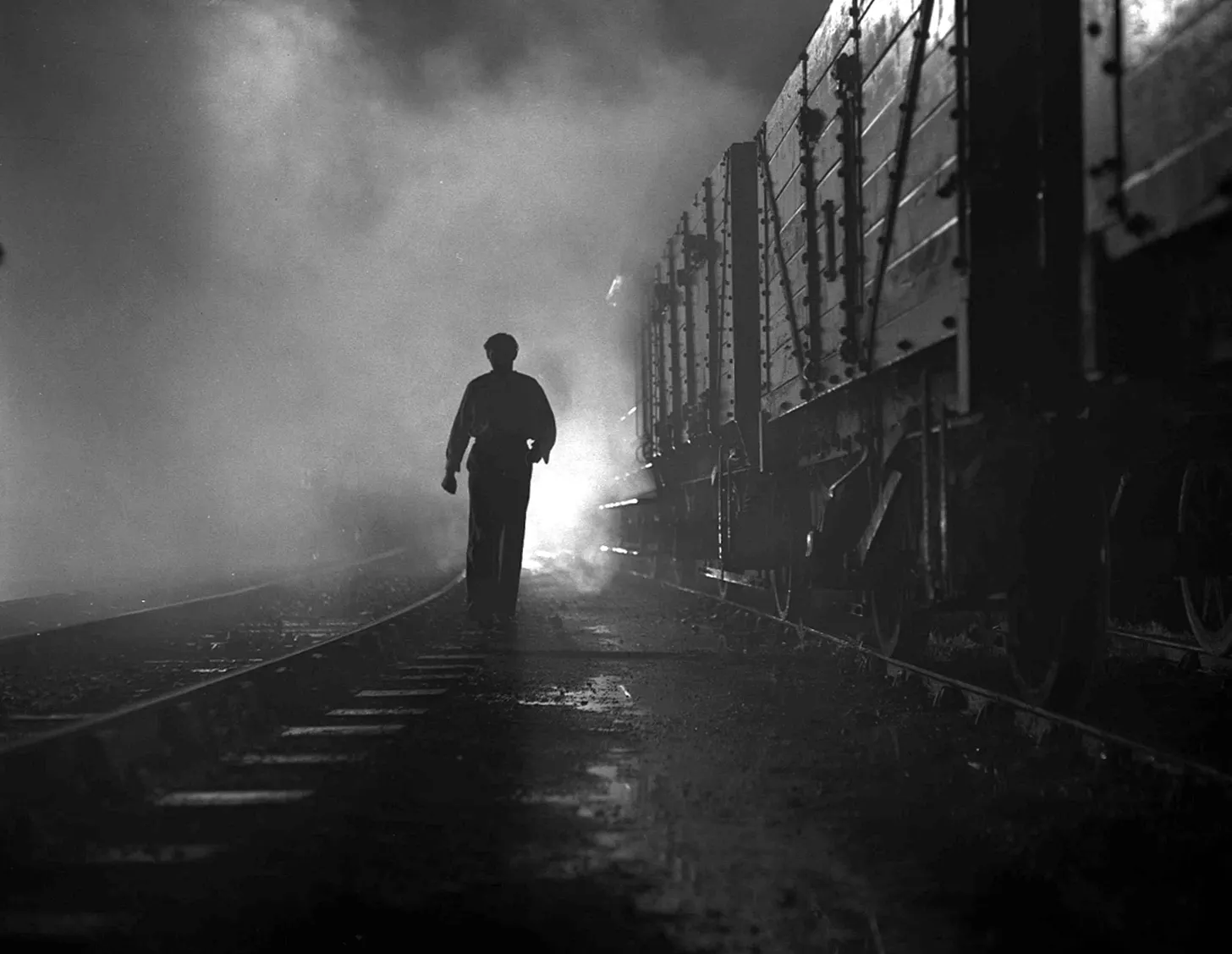
| It Always Rains on Sunday |
Notes written for the monthly catalogue of Filmoteca Española on Great Expectations, currently screening in Madrid as part of the May–June 2026 programme. — Ehsan Khoshbakht
1945 was a watershed moment for Britain. To this day, it is debated whether it marked the beginning of greatness or the start of decline. A 45-film retrospective at the 2025 Locarno Film Festival explored that postwar landscape. As Ian Christie, a prominent historian of British cinema, told me, postwar Britain was a place you would rather not be: grim, desolate, broken, grey, and somehow lost, after the wartime spirit of unity had become an old, undesired rag, quickly discarded.
At the same time, Britain—or rather British cinema—was brimming with greatness on screen, a greatness that, beyond a few household names, has remained criminally marginal. The films of this era reflect the victor’s landscape of loss and displacement. They chart a nation’s rise from the ashes of conflict and follow its faltering steps toward reconstruction against the backdrop of the British Empire’s decline.
The retrospective, a generous selection of which is playing in Madrid, is structured around the question of Britishness as reflected through cinema. It focuses solely on contemporary narratives—excluding period pieces and WWII stories—and deliberately leaves out the New Wave and Kitchen Sink movements, whose early phases overlapped with the period covered in the programme. Yet, though war films are absent, the shadow of the war looms over characters’ motives and shapes the scarred landscapes of cities, where life and its meagre joys were still rationed.
The series explores different shades of popular cinema grounded in reality, departing from it according to their own generic, authorial, and formal convictions. The opening and closing films of this selection are marked by two pivotal works by Michael Powell. I Know Where I'm Going! (1945, co-directed with Emeric Pressburger) and Peeping Tom (1960) respectively chart British cinema’s shift from the collective to the personal, and from modesty to excess. Peeping Tom pulled the rug out from under the very acts of filmmaking and spectatorship—marking the end of an era—and, due to its vitriolic reception, effectively ended Powell’s career.
Peeping Tom also alludes to a troubled childhood of the titular character. That childhood, marred by shortages, broken families, and bombsite ruins, conveys a sense of imminent danger present in several films in the retrospective, including the poignant Mandy (the story of a deaf girl and the efforts of her mother and a school headmaster to help her connect with the world) and the two films The Yellow Balloon and Hunted, in which bombsites remain sites of danger and destruction long after the war ends.
A lyrical film about a fugitive murderer (Dirk Bogarde) dragging along an orphaned boy who has witnessed his crime, Hunted occupies a middle ground between Roberto Rossellini and British crime films. It also introduces something unique to British cinema: a sense of restlessness leading to escape, here from suffocating London to the open landscapes of Scotland. The same restlessness drives the couple on the run in The Clouded Yellow—a prototype of James Bond films—from the cramped London Underground to the Lake District. The most compelling escapes, however, are to nowhere, such as James Mason’s agonizing flight from his doomed fate in the wintry Belfast of Carol Reed’s seminal Odd Man Out.
London itself emerges as a key character in many of the stories told here, with films using the city for unforgettable location shoots. Two brilliant classics stand out: Jack Lee’s Turn the Key Softly, a neorealist-influenced story of three women released from jail into the cold indifference of London, and Basil Dearden’s Pool of London, the story of two seamen who become entangled in a smuggling racket in the city’s docklands.
British cinema has often embraced the perspective of outsiders, whether through stories of strangers arriving in unfamiliar places and transforming them (and being transformed in return), or through filmmakers of foreign origin such as Pressburger and Alberto Cavalcanti. The temporary or permanent refuge that the British film industry offered to victims of the Hollywood blacklist, including Edward Dmytryk, Joseph Losey, and Jules Dassin, was a grand gesture that should not be forgotten. In return, that openness also gave rise to some of the most distinctively British films these foreigners made during their stay. Their films carry an anxiety translated into tales of self-destruction. They are nightmares extended into daily reality, like in Dmytryk’s Obsession, in which a psychiatrist smuggles acid from work daily to a blitzed building with the aim of killing and dissolving his wife’s American lover.
Forgive me for citing the old cliché of François Truffaut dismissing British films when he infamously told Hitchcock that he admired the British director’s style because to him it was “un-English”. Truffaut outrageously claimed that there was something essentially uncinematic—or as he tactlessly said, “anti-cinematic”—about Britain. He went on to list items that he saw as deterrents to strong emotion in cinema: the English countryside, the subdued way of life, the stolid routine, the weather, and British humour. In effect, he has listed all the qualities that make the films in this retrospective not only great but also unique in their cultural specificity.
See the English and Scottish countryside as sites of thrill and lapse in The Clouded Yellow and I Know Where I'm Going!. For how a subdued way of life and stolid routine are brutally capsized, watch Lance Comfort’s darkly brooding Temptation Harbour. There is little doubt about the razor-sharp edge of British humour, as demonstrated in Muriel Box’s Simon and Laura, a hilarious satire of reality TV. If still unconvinced, Robert Hamer’s bleakly eloquent It Always Rains on Sunday proves how the same rain that makes life miserable can make British films great. These films’ humanism, exuberance, and existentialist edge remain unmatched in the history of cinema. Fetch your umbrella and watch them with fresh eyes.

No comments:
Post a Comment