
 |
| Turn the Key Softly |
Notes written for the monthly programme of BFI Southbank, May 2026. In May and June some of these films are also playing at the Academy Museum of Motion Pictures in LA, Filmhaus Nürnberg in Nuremberg, and Filmoteca Española in Madrid. – EK
Great Expectations: British Postwar Cinema
Handpicked highlights from a recent retrospective at Locarno, revealing the humanism, exuberance, and existentialist edge of British classics.
From its very first edition, the 79-year-old Locarno Film Festival showed a genuine interest in British films, culminating in Hunted (1952) winning the festival’s top prize. Last year at the Swiss festival, we revisited that tradition with a retrospective structured around the question of life in Britain as reflected in postwar films set in contemporary times. This handpicked selection from that larger programme showcases precious 35mm prints from the collection of BFI National Archive and traces different shades of popular cinema from a golden period – films grounded in reality yet shaped by distinct generic, authorial, and formal convictions. Be it a comedy or a crime film, the shadow of the war continues to loom over characters’ motives and scars the urban landscapes they inhabit, where life and its meagre joys remain rationed. Including several rare gems, these works chart a nation’s rise from the ashes of conflict and follow its faltering steps toward reconstruction.
Hunted
UK 1952. Director Charles Crichton. With Dirk Bogarde, Jon Whiteley, Elizabeth Sellars, Kay Walsh. 84min
A cinematic milestone blending the anguish of film noir with the pathos of neorealism.
A lyrical film about a fugitive murderer (Dirk Bogarde) who takes with him a war-orphaned boy that has witnessed his crime. As they flee from London to Scotland, an unexpected bond forms between them. Occupying a middle ground between the cinema of Roberto Rossellini and British rubble crime films, it became the first British film to win the Golden Leopard at the Locarno Film Festival.
+ A Diary for Timothy. UK 1945. Director Humphrey Jennings. 39min
A docudrama conceived as a cinematic letter to a newborn boy, explaining the kind of future that awaits him.
The Three Weird Sisters
UK 1948. Director Daniel Birt. With Nancy Price, Mary Clare, Mary Merrall, Nova Pilbeam, Raymond Lovell. 82min.
Dylan Thomas’s finest original screenplay is an eccentric blend of sharp wit and gothic shudder.
One of only two original works by the poet Dylan Thomas for the screen, this semi-gothic oddity follows the titular sisters as they attempt to poison their half-brother to prevent their crumbling Welsh home from being sold. The dialogue – neither realistic nor necessarily cinematic – is pure gold, entirely Thomas’s own voice, brought to life under the inspired direction of the rather obscure Daniel Birt.
+ To Be a Woman. UK 1951. Director Jill Craigie. 18min
With wit and unflinching insight, this pioneering film examines the role of women in 20th-century Britain.
The Fallen Idol
UK 1948. Director Carol Reed. With Ralph Richardson, Michèle Morgan, Sonia Dresdel, Bobby Henrey, Jack Hawkins. 91min.
A canonical classic from the director of The Third Man.
Directed with devastating precision by Carol Reed from a script by Graham Greene, this film follows the lonely, bored son of an ambassador in London whose only companion is a mild-mannered butler. When the butler is accused of murdering his tyrannical wife, the boy –innocently trying to protect him – unwittingly brings him closer to the gallows.
Train of Events
UK 1949. Directors Sidney Cole, Charles Crichton, Basil Dearden. With Jack Warner, Peter Finch, Valerie Hobson, Gladys Henson, Susan Shaw, Patric Doonan. 88min
One of the finest Ealing Studio portmanteau films, incorporating multiple mediums, including early references to television.
An Ealing anthology film that combines comedy and drama in an unusual but effective way, examining the lives of a train’s passengers before a rail disaster. They include a philandering classical conductor torn between his wife and a glamorous pianist (in a segment directed by Charles Crichton) and an actor who has murdered his wife (segment by Basil Dearden).
The Happiest Days of Your Life
UK 1950. Director Frank Launder. With Alastair Sim, Margaret Rutherford, Joyce Grenfell, Richard Wattis. 81min.
Alastair Sim and Margaret Rutherford, in disarmingly excellent form, navigate the delicate predicament of gender mix-up.
Due to a clerical error, a jittery headmaster (Alastair Sim) must host female students sent to his all-boys school by an unflinching headmistress (Margaret Rutherford). The pair scramble to hide the mix-up from unsuspecting visitors and parents. One of the finest British comedies from the legendary team of Frank Launder (directing) and Sidney Gilliat (producing), the film hilariously skewers bureaucracy while joyfully celebrating chaos.
Mandy
UK 1952. Director Alexander Mackendrick. With Phyllis Calvert, Jack Hawkins, Terence Morgan, Godfrey Tearle, Mandy Miller. 93min
Shattering story of overcoming childhood disability, acted and directed with astonishing mastery.
A heartfelt and often poignant tale of a deaf girl (Mandy Miller, delivering one of the finest child performances on film) and the efforts of her mother (Phyllis Calvert) and teacher (Jack Hawkins) to help her connect with the world. The story unfolds as a quiet metaphor for a nation relearning how to communicate.
The Flying Scot
UK 1952. Director Compton Bennett. With Lee Patterson, Kay Callard, Alan Gifford. 70min
British low-budget crime cinema at its very best.
A masterclass in turning an £18,000 B-movie into great cinema, the film opens with the famous 13-minute silent heist sequence aboard the Edinburgh–London sleeper. Featuring director Compton Bennett’s familiar triangle of muscular stud, the blonde, and the older, troubled man – here teamed up to rob the titular train – this is a journey of sweat, ulcer pain, and unrelenting suspense.
+ The Stranger Left No Card. UK 1952. Director Wendy Toye. 23min
Tale of a seemingly harmless magician with dark intentions that Jean Cocteau described as a “little, diabolical film.”
The Yellow Balloon
UK 1953. Director J. Lee Thompson. With William Sylvester, Kenneth More, Kathleen Ryan, Andrew Ray. 76min
The most thrilling entry in the cycle of “hunted children” films in British cinema.
In the bombed-out ruins of London, Frankie (played by 13-year-old Andrew Ray) accidentally causes his friend’s death and is blackmailed by a ruthless criminal (American actor William Sylvester) into aiding a robbery. This unflinching drama marked J. Lee Thompson’s breakthrough, showcasing his bold, gritty vision in only his second film.
+ The Elephant will Never Forget. UK 1953. Director John Krish. 11min
This evocative film captures the final tram journey before the service was discontinued in London.
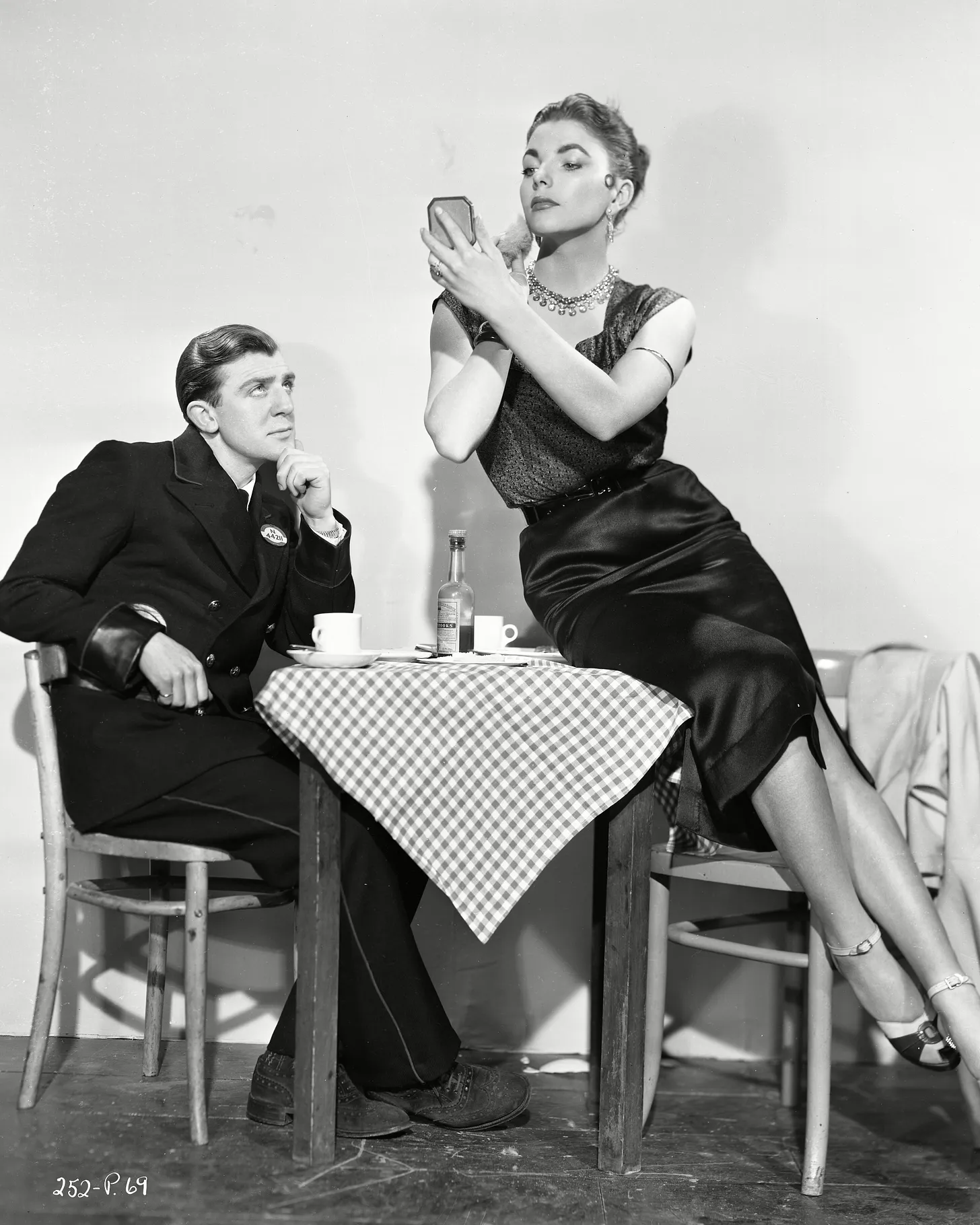
Turn the Key Softly
UK 1953. Director Jack Lee. With Yvonne Mitchell, Joan Collins, Kathleen Harrison, Terence Morgan. 81min
A gem of London films, following a trio of troubled women.
A Neorealist-influenced story of three women (Yvonne Mitchell, Joan Collins, Kathleen Harrison) released from jail into the cold indifference of London, vividly captured by Geoffrey Unsworth’s stunning cinematography. This film alone attests to director Jack Lee’s underrated place in cinema, showcasing his sensitive, occasionally sensual approach, a continental flair, and remarkably assured pacing.
Time Without Pity
UK 1957. Director Joseph Losey. With Michael Redgrave, Ann Todd, Leo McKern, Peter Cushing. 85min
A key film of the Hollywood blacklistee Joseph Losey in his British exile.
In this searing indictment of capital punishment, an alcoholic father (Michael Redgrave) has 24 hours to save his wrongly accused son from execution. The blacklisted director Joseph Losey’s first British film released under his real name – after a series of works under assumed names – carries autobiographical echoes, including alcoholism and the experience of a foreigner trying to make sense of England.
Hell is a City
UK 1960. Director Val Guest. With Stanley Baker, John Crawford, Billie Whitelaw, Donald Pleasence. 98min
Stanley Baker’s brooding inspector shines darkly in an existentialist police procedure drama.
A superb Hammer-produced cop movie, featuring Stanley Baker as Inspector Martineau, hunting a murderer while struggling with his crumbling marriage. The film maintains a strong psychological focus, unfolding at a measured pace that accelerates for a thrilling climax atop a building in Manchester – one of British cinema’s most exhilarating sequences. Director Alexander Payne called it his major discovery of this retrospective.
Never Let Go
UK 1960. Director John Guillermin. With Richard Todd, Peter Sellers, Elizabeth Sellars, Adam Faith. 90min
A tough and psychologically nuanced British take on The Bicycle Thieves.
This first-class thriller follows a salesman, played brilliantly by Richard Todd, whose quest to recover his stolen car leads him into the hands of a brutal London gang, led by a cast-against-type Peter Sellers. Director John Guillermin’s brassy precision, revealing his fascination with characters driven by obsession and psychopathy, is heightened by John Barry’s score and fast, riotous editing.

No comments:
Post a Comment