
 |
| Tallinna Turg |
Part three of what I – and, in some cases, colleagues I have spoken to – recommend from the 2026 edition of Il Cinema Ritrovato. Parts one and two can be accessed here.
21
La Grève des bonnes
Dir: Charles Lucien Lépine | France, 1906
+
Les Effets de la foudre
Dir: Gaston Velle | France, 1906
For the Century of Cinema: 1906 series, Mariann Lewinsky and Karl Wratschko watched approximately 500 films and ultimately selected 64 to be screened across six programmes. The screenings are closely modelled on the way exhibitors of the period organised their programmes, recreating a rich variety of emotional and aesthetic effects by combining different forms of production, including comic sketches, dramas, féeries, and topical films.
Two major highlights are La Grève des bonnes and Les Effets de la foudre, both produced by Pathé Frères. In La Grève des bonnes [The Strike of the Housekeepers], working-class women fight against exploitative labour conditions, going so far as to beat up policemen. Les Effets de la foudre [The Effects of Lightning] is particularly remarkable for its inventive use of experimental techniques, including scratching the filmstrip with a sharp tool to create striking visual effects.
22
Cradle Song
Dir: Mitchell Leisen | USA, 1933
One of the festival’s rare gems is Leisen’s debut, which is seldom screened today. This beautiful 35mm print comes from the Library of Congress, and what is most surprising is that the film has more in common with Robert Bresson’s Les Anges du péché than with the light comedy-dramas usually associated with Leisen. It will be screened only once, and if you miss it, you may not have another chance to see it on the big screen. The story is set in a convent, though that hardly means that temptation – or the delicate interplay of lust and desire – has been entirely suppressed in the service of God Almighty.
23
Dracula in Istanbul
Dir: Mehmet Muhtar | Turkey, 1953
The Turks turned to Bram Stoker and brought his notorious count to Istanbul. The result is utterly bonkers. A great deal of work has clearly gone into restoring what appears to have been a badly damaged print. This screening should mark the beginning of a broader exploration of the concept of "undead" in Muslim lands, where blood is considered haram (impure). It presents a fascinating narrative challenge – one that each Muslim country captivated by the bloodsucking fiend has resolved in its own distinctive way.
24
Subarnarekha [The Golden Line]
Dir: Ritwik Ghatak | India, 1962-65
Ghatak’s films – which are sadly as few in number as the years of their creator's short life – have often survived in horrendous prints. This strand of new restorations is therefore one of the festival’s greatest gifts, and I am certain it will travel far and wide. (London has already announced an almost complete retrospective.) Retrospective co-curator Sanghita Sen has singled out this film as a particular highlight, describing it as the work in which Ghatak’s “experiment with multilayered narrative reaches its peak” and as a film that is “expansive in scope yet deeply intimate in emotional register.”
25
Lemonade Joe
Dir: Oldřich Lipský | Czechoslovakia, 1964
A Western musical in dazzling monochrome, both delirious and joyous, looking immaculate in a brand-new restoration. It will evoke fond memories of The Cassandra Cat for those who caught it a few years ago, while confirming that when Czechoslovak cinema decided to embrace exuberance and madness, it was capable of going all the way.
Dir: Lino Brocka | Philippines, 1974
This is another entry in the festival’s ongoing exploration of the work of Filipino master Lino Brocka. Cecilia Cenciarelli’s much-loved Cinemalibero strand will host the world premiere of this new restoration, a collaborative effort involving partners from France (Carlotta), the Philippines, the US, the UK and Italy. The film returns to the familiar terrain of Brocka’s youth and, as Cecilia's programme notes observe, “transforms the seemingly quiet rhythms of provincial life into a piercing portrait of Filipino society, where Catholic morality, entrenched hierarchies and the promises of modernisation mask deeper currents of violence and repression.”
27
Ten Seconds to Hell
Dir: Robert Aldrich | UK/West Germany, 1959
Give Robert Aldrich a ruin and a handful of wired, volatile men and he will give you a one-act Beckettian drama of the highest cinematic calibre. Here, a group of German military men in the ruins of postwar Berlin are assigned the task of defusing unexploded bombs left behind by Allied bombardments. Mind-blowing – in this case, the latter half of the expression is almost literal.
28
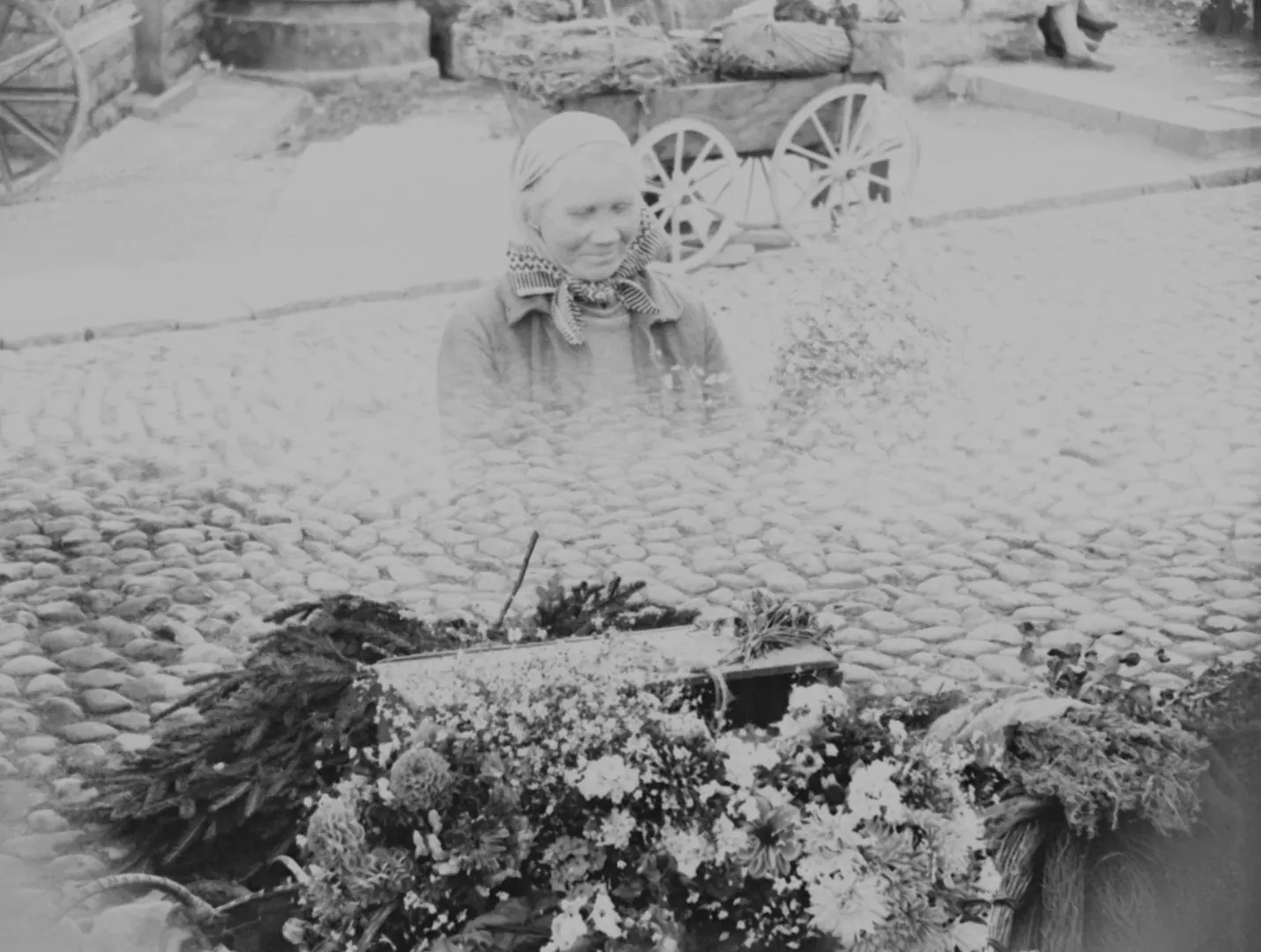
Tallinna Turg
Dir: Konstantin Märska | Estonia, 1926
Oliver Hanley, curator of the 100 Years Ago strand, told me this was his favourite short in the section (with Kuleshov’s By the Law his favourite feature of 1926). It makes perfect sense: This is a remarkably innovative film, featuring modern-looking dissolves, split-screen effects (reminiscent of those in Lewis Milestone’s Rain, screened last year), double exposures that anticipate some of cinema’s more sophisticated matte work, handheld camerawork, candid photography, fast motion, reverse motion, anthropological voyeurism, and a keen sense of everyday poeticism. The most astonishing aspect of this aesthetic exploration of the relationship between the masses and the individual is that it achieves all of this in just three minutes and twenty-six seconds, title cards included. And then people wonder why I grow weary of the two-hour-and-forty-five-minute films that contemporary directors seem determined to inflict upon us.
29
Red, White & Bluegrass
Dir: Elliott Erwitt | USA, 1973
I like the colour blue. I like grass (especially to lie on). And I like bluegrass music. It swings like jazz, yet remains wonderfully simple and heartfelt. This rare documentary – not even listed on IMDb – by the renowned photographer Erwitt offers a glimpse into the world of grooving guitars, violins, and banjos.
30
Sunrise: A Song of Two Humans
Dir: F.W. Murnau | USA, 1927
You know the film – probably the greatest of all silent films. But there are three excellent reasons to revisit it: (a) a screening in the Piazza Maggiore; (b) a new restoration undertaken by the San Francisco Film Preserve in collaboration with the BFI National Archive, the Cinémathèque royale de Belgique, MoMA, and others; and (c) a new score by Timothy Brock.

No comments:
Post a Comment