Friday, 20 April 2012

Yolanda's Dream

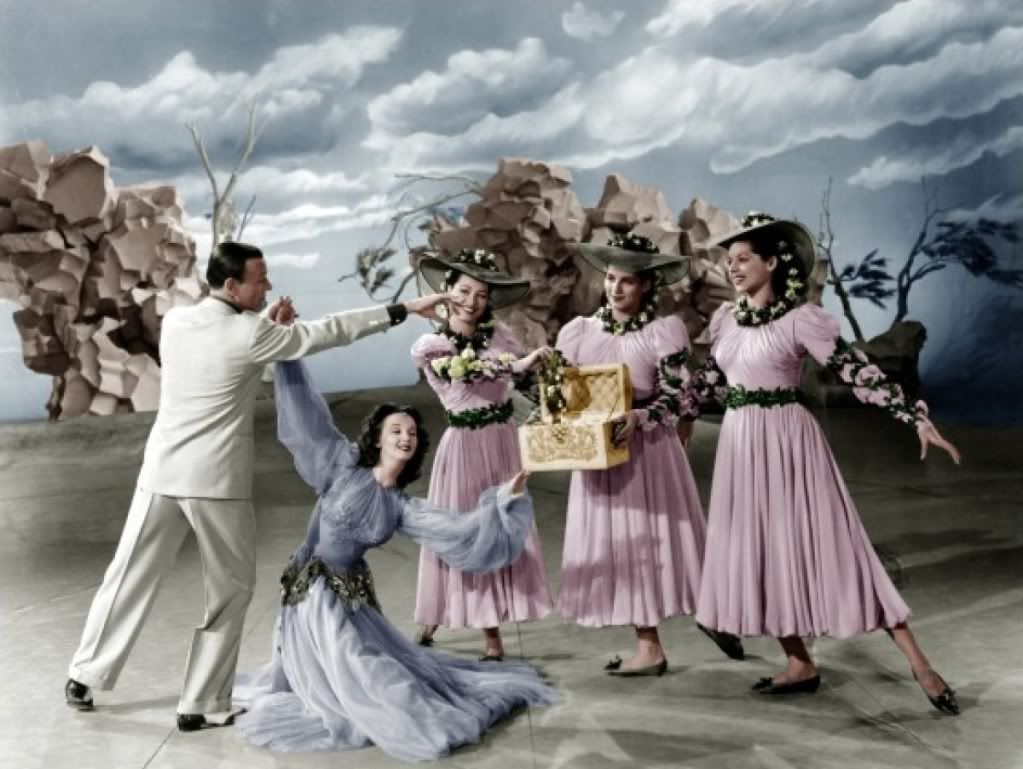
Jane Feuer examines the interchangeability of 'reality' and 'dream' in one of the best sequences of Yolanda and the Thief

The ultimate synthesis of the musical consists in unifying what initially was imaginary with what initially was real. Musicals may project the dream into the narrative, implying a similar relationship between film and viewer. The dream resolution, the resolution of the film, and leaving the theater tend to occur within a very short time span. For a little while after seeing a musical, the world outside may appear more vivid; one may experience a sudden urge to dance down the street. The feeling of not knowing quite which world one is in may be evoked within the film as well. Peter Wollen says that, in Hollywood films, everything shown belongs to the same world and complex articulations within that world flashbacks are carefully signaled and located.

Thursday, 19 April 2012

Art of Entertainment

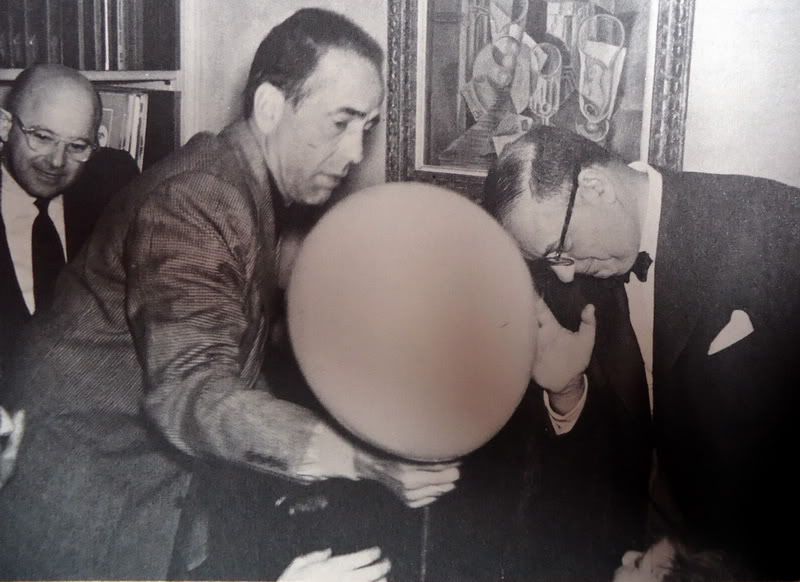
Humphrey Bogart and Ira Gershwin entertaining the very little Liza Minnelli at Minnelli's.

Tuesday, 10 April 2012

Minnelli Loves...


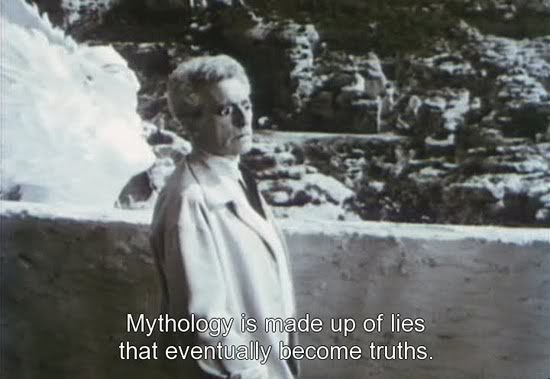
In Mr. Richard Dyer’s introduction to the season of Minnelli which took place at National Film Theatre, someone asked about the influences on Minnelli’s cinema. It was near the end of the Q&A session, and memories couldn’t sever us well to point out that most of the directors who made an impact on Minnelli, were, as a matter of fact, European ones. If we want to bring up just one name, whose style and ideas can predict a great part of Minnelli’s career, that would be the painter, poet, designer, filmmaker Jean Cocteau. It’s tempting to see most of Minnelli’s film as variations of Blood of a Poet, made by Cocteau in 1930.

Monday, 9 April 2012

Vincente Minnelli Books


A Pictorial Bibliography of Vincente Minnelli (1959-2010)
If you want to enlarge or save any of these pictures, just click on the slideshow.

Sunday, 8 April 2012

Undercurrect#2

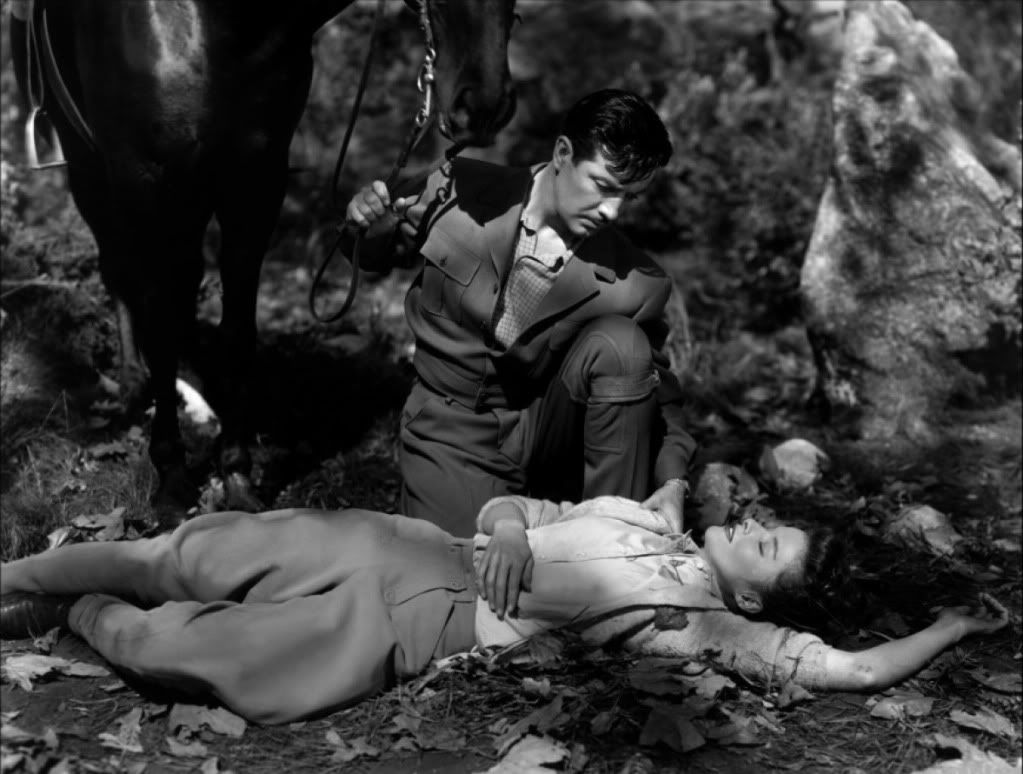
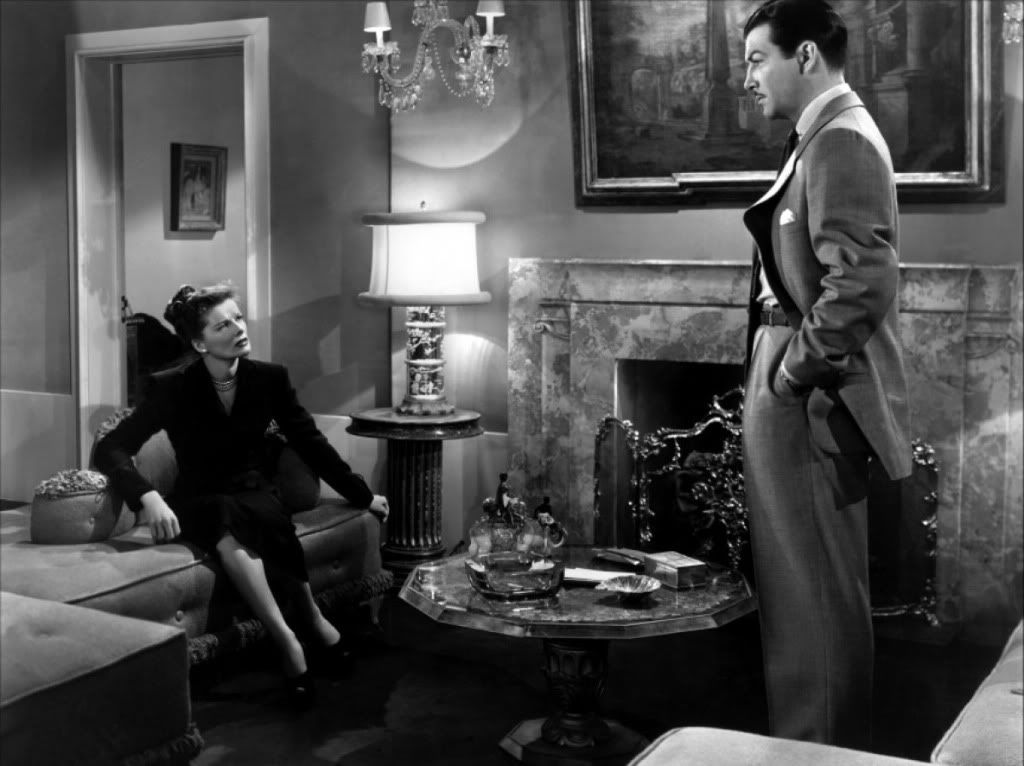
Second part of Minnelli's reminiscing of how he worked with Katherine Hepburn, Robert Mitchum and Robert Talylor in his only film noir, Undercurrent (1946). Part one can be reached here.

Yet, as Kate and I were becoming good friends, I discovered that my cordial relations with Bob Taylor were in danger of deteriorating. He'd taken my chronic vagueness as disinterest, I suppose, and though he never voiced any complaints, I was aware of his dissatisfaction. Bob's wariness, that I was throwing scenes to Kate, ended when he discovered how effective he was being in the picture.

His performance helped us prolong the denouement. Though Bob had gotten over his pretty boy reputation, you still couldn't disguise his charm. The audience simply wouldn't take him for a murderer...until that climactic scene with his brother. The mask was stripped, and his psychopathic character was finally revealed. I started mulling over the scene, to see if I could supply it with a new approach.

Saturday, 7 April 2012

Undercurrent#1

Hepburn and Taylor - Shadow of Mitchum

Undercurrent was one of the few Minnelli's films, outside his familiar territory of musical, melodrama and comedy. Surprisingly, it was a film noir. Probably one of the oddest films in Minnelli's career, it still bears some of key themes of Minnelli's world, especially those related to the darker side of him. Last night's screening of Under the Clock [US: Clock] at NFT, showed how ready was Minnelli for noir genre in the 1940s. In Under the Clock, there is a scene when newly married couple enter a run-down bar, where a mad woman and a loquacious drunk, in a low-key photography, talk about un-Americans, madness, corruption and "dogs" which is a disturbing scene, almost like a mistake, in a sweet melodrama. I thought that scene can be approached as an equivalent of Halloween sequence of Meet Me in St. Louis, made one year earlier, where a sudden destruction of the dream world shocks the Minnelli's characters. Here, from his autobiography, I Remember It Well, Minnelli, charmingly, tells the story of how he worked with three major stars in Undercurrent. This is part one of his memoirs about Undercurrent. Film will be shown tomorrow (8 April, 18:30) at NFT, and the second screening is 18 April, 20:40.

Bob Mitchum feels it was fiscal collusion between the studio and David Selznick, to whom he was under contract that brought him the part. For he admits he was never comfortable in the role of the sensitive Michael.

But Bob didn't need the later-developed Mitchum swagger to convey his innate strength. He's always underestimated his ability.

I can't deny that Selznick was being paid $25,000 a week to loan out Bob for my picture, and getting the same amount for a second Metro picture, Desire Me, which Bob was shooting in the afternoon. On top of this, Bob was working at night on The Locket at RKO. "I worked the three pictures for twenty-six straight days," Bob remembers. "We'd shoot all night at RKO, then I'd report for Undercurrent from seven in the morning until noon, when I'd be flown to Monterey to work all afternoon on the picture with Greer Garson." No wonder he became famous for his sleepy eyes.