
 |
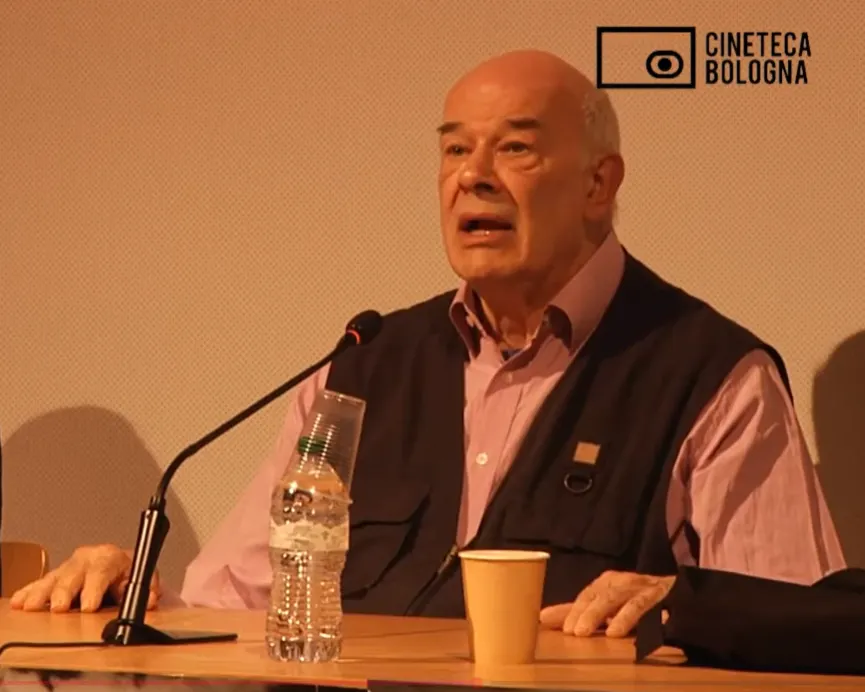
| Tony Rayns in Bologna in 2018 |
Il Cinema Ritrovato joins the international film community in mourning the great British film critic, historian, programmer, and lifelong champion of Asian cinema, Tony Rayns, whose passing was announced today.
Tony Rayns was the author of landmark books on Rainer Werner Fassbinder, In the Mood for Love, and Kenji Mizoguchi. His final book, published in 2024, was Just Like Starting Over: A Personal View of the Reinvention of Korean Cinema.
Since the 1970s, Rayns played a decisive role in the international recognition of Asian cinema and in transforming the Western world's understanding of films produced across Asia beyond Japan. His influence has been profound and culturally significant—something repeatedly acknowledged by generations of Asian filmmakers, some of whom insisted that only Rayns should prepare the English subtitles for their films.
His love of cinema, however, knew no geographical or aesthetic boundaries. Alongside his unrivalled knowledge of Asian cinema, he was an enthusiastic admirer of Roger Corman and often spoke of his wish to curate a John Farrow retrospective for Il Cinema Ritrovato.
Tony's relationship with our festival stretched back many years, and he returned to Bologna with remarkable dedication. He became one of the festival's familiar and cherished presences, often accompanied by a small circle of friends gathered outside the Cinema Jolly, dressed in his trademark reporter's vest. Patient and endlessly curious, he would ask thoughtful questions while smoking one of his long, slim cigarettes.
Tony Rayns helped Il Cinema Ritrovato in many ways. He wrote catalogue essays, moderated some public conversations—including one with Jack Hazan following the screening of A Bigger Splash—and collaborated with us on The Rebirth of Chinese Cinema (1941–1951), a retrospective organised in 2018.
Although based in south London, Tony became, in many ways, easier to encounter in Bologna than at home. In his later years he increasingly embraced a life of creative solitude in his own city. Bologna was fortunate to remain one of the places where he could still be found: watching films from morning until night. In that sense, Bologna was lucky to have him.

No comments:
Post a Comment