Wednesday, 12 June 2024

Symphonies in Black: Duke Ellington Shorts

Black & Tan

Symphonies in Black: Duke Ellington Shorts

A programme by Jonathan Rosenbaum and Ehsan Khoshbakht (Il Cinema Ritrovato, Bologna, June 2024)

Introductory note by Jonathan Rosenbaum


In 16 shorts made over a stretch of almost a quarter of a century (1929-1953), Duke Ellington and his Orchestra perform in a variety of settings, often with dancers and singers – including Billie Holiday in Symphony in Black: A Rhapsody of Negro Life. The latter cuts freely between Ellington alone in thoughtful composing mode, Ellington in a tux performing the same extended composition with his band at a concert, arty images of men engaged in heavy labour, a wordless church sermon, a nightclub floorshow, and even a short stretch of story showing Holiday being pushed to the ground by an ungrateful lover before singing there about her misery – a near replica of the musical setup accorded to Bessie Smith in her only film appearance six years earlier.

Indeed, although the pleasures to be found here are chiefly musical, the narrative pretexts for these performances offer a fascinating look at how both jazz and Black musicians were perceived and expected to behave during the first three decades of talkies. At least half of the films are Soundies made for sound-and-image jukeboxes in the 40s, but even these often trade on narrative details such as the adoring women digging the solos by Ray Nance, Rex Stewart, Ben Webster, and others at an “eatery” after hours in Jam Session (1942), or the spectacular dancing by athletic jitterbugging couples in Hot Chocolate (Cottontail) from the same year.

Friday, 7 June 2024

Il Cinema Ritrovato 2024 | Almost All the Titles

Jean-Luc Godard at Il Cinema Ritrovato 1998

More or less all the titles to be screened during Il Cinema Ritrovato 2024. There might be some titles listed more than once, as well as potential typos and incorrect attributions, all my mistake. Between features and shorts, we will present close to 500 titles produced in 35 countries and sourced from more than 140 archives. – EK

Sunday, 2 June 2024

Guide to Kozaburo Yoshimura at Il Cinema Ritrovato 2024

Kozaburo Yoshimura

Guide to Kozaburo Yoshimura at Il Cinema Ritrovato 2024

By Alexander Jacoby


Kozaburo Yoshimura (1911-2000) is one of the neglected masters of classical Japanese film. An almost exact contemporary of Akira Kurosawa and Keisuke Kinoshita, he was responsible for some of the postwar Japanese cinema’s most compelling films, which bear eloquent witness to social change in a rapidly modernising country. But these are dramas above all, which grip and move audiences; as Tadao Sato wrote, they are “not mere social criticism, but films that flesh out the human element of the story”.

Monday, 27 May 2024

Anatole Litvak Retrospective | The Schedule

Anatole Litvak (in the middle) with his buddies Billy Wilder and John Huston


JOURNEYS INTO NIGHT: THE WORLD OF ANATOLE LITVAK

Viaggio nella notte: il mondo di Anatole Litvak

Il Cinema Ritrovato 2024

All the screenings at the Jolly cinema

The schedule subject to change until official announcement in early June

A couple more screenings will be added to other venues, including to Modernissimo's schedule

Where to Begin with Gustaf Molander | Jon Wengström​​'s Il Cinema Ritrovato Guide

Gustaf Molander

Jon Wengström​​, the archive Senior Curator of the Swedish Film Institute, has curated a programme dedicated to Swedish master Gustaf Molander. This retrospective will take place at Bologna's Il Cinema Ritrovato in June 2024. Jon has blogged here, giving you some tips about what to see in that strand, that is if you don't want to see every single Molander which I think you should. – EK


Guide to Gustaf Molander at Il Cinema Ritrovato 2024

By Jon Wengström


Gustaf Molander made almost 70 films in a career that lasted more than half a century, and his trajectory as a director is parallel to that of the development of the Swedish film industry. He wrote the script to Terje Vigen (Victor Sjöström, 1917), which was the starting point of the Golden Age of Swedish silent cinema, and he directed the era’s epilogue with the Selma Lagerlöf adaptations Ingmarsarvet (1925) and its sequel Till Österland (1926). He was one of the very few Swedish directors who handled the transition to sound successfully, as proven by En natt (1931). During the 1940s, more than any other Swedish filmmaker, he made films that reflected the war and its aftermath, and after collaborations with a young Ingmar Bergman, including Woman Without a Face (1947), in the 1950s Molander made remakes of classic silent films in colour and Cinemascope, as a response to the advent of television.

Wednesday, 22 May 2024

Entezar (Amir Naderi, 1974)

Entezar [Waiting]

Playing at Il Cinema Ritrovato, June 25, 2024.

Entezar, Amir Naderi’s second film for Kanoon – the Iranian institution in charge of producing cultural goods, including films, for children and young adults – was a deft and calculated move away from the gritty street dramas and crime films of the early 1970s that made Naderi famous but also left him feel artistically unfulfilled.

Tuesday, 21 May 2024

The Sealed Soil [Khak-e Sar bé Mohr] (Marva Nabili, 1977)

The Sealed Soil

The digital restoration of The Sealed Soil [Khak-e Sar bé Mohr], directed by Marva Nabili, will be premiered at UCLA Film & Television Archive on June 15 and a week later at Bologna's Il Cinema Ritrovato.


Khak-e Sar bé Mohr chronicles the repetitive and repressed life of Roo-Bekheir, a young woman in a poor village in southwest Iran, and her resistance to forced marriage. It’s a formally rigorous, if emotionally distanced, critique of patriarchy and the spurious reform of Iranian agricultural life that was a factor in the 1979 revolution.

Sunday, 12 May 2024

Jacques Tati, tombé de la lune (Jean-Baptiste Péretié, 2022)

Jacques Tati, tombé de la lune

 
Jacques Tati, tombé de la lune (2022) 

Directed by Jean-Baptiste Péretié


Jacques Tati needs no introduction but it is exactly the kind of "filmmaker who needs no introduction" that is worth revisiting repeatedly, in viewing, in film literature and now in the increasingly popular format of television documentaries. Jean-Baptiste Péretié, director of other works on Keaton, Al Pacino and John Wayne, has efficiently captured the jazzy architecture of Tati's universe in this fine introduction to a jolly genius.

Monday, 8 April 2024

Designed on Celluloid: Architecture in Silent Cinema

High Treason

Samantha Leroy, in charge of "la programmation et d’exploitation" at the Fondation Jérôme Seydoux-Pathé in Paris asked me to curate a season on architecture and silent cinema. This short essay was written to accompany my 40-film selection for a retrospective which was held in conjunction with an architecture exhibition, dedicated to Renzo Piano's magical design for the Fondation's building in the south of Paris. – Ehsan Khoshbakht


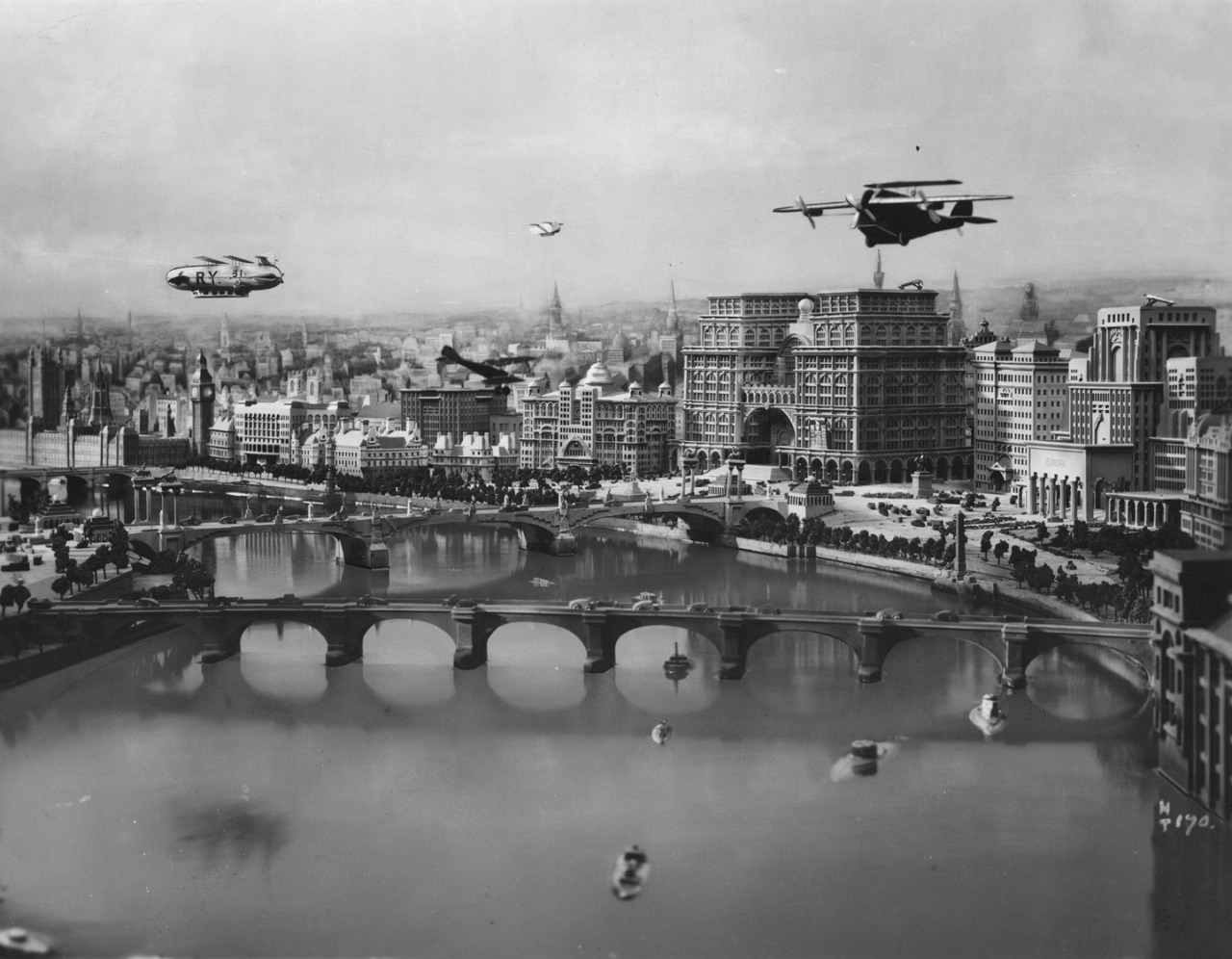
A love story of sorts, the relation between cinema and architecture. Architecture saw in the cinema what it had dreamed of for centuries: being equipped with eyes more penetrating and observant than those of human beings, a tool that could examine architecture from every possible angle and measure it in time. Cinema, in return, found incredible potential in architecture when architectural monuments and soon studio-built sets added attraction, realism, and drama to the movies.

Thursday, 28 March 2024

The Lady with the Torch | The Centenary of Columbia Pictures at Locarno Film Festival 2024

During its golden age, Columbia Pictures produced some of American cinema’s most iconic films across a panoply of varied styles and popular genres. In 1924, the relatively small-scale motion picture company Cohn-Brandt-Cohn rebranded itself as Columbia Pictures. This new studio would eventually feature, as its masthead and in the preamble before each film, the Lady with the Torch, the Statue of Liberty-like female figure who was, at first, draped nobly in the American flag and has become recognizable to film lovers everywhere.

Organized in partnership with the Cinémathèque suisse, The Lady with the Torch will present the studio in all its glory, shining a light on lesser-known genre filmmakers like Max Nosseck or William A. Seiter, as well as celebrating major auteurs like Howard Hawks, Frank Borzage, Fritz Lang, Frank Capra, George Stevens, and John Ford, who made some of their most characteristic as well as most surprising films while passing through the studio. So too did its movies do much to hone and define the screen presences of treasured stars like Rita Hayworth, Jean Arthur, Rosalind Russell, and William Holden, and lay the groundwork for the new era of more intensely psychological acting that would come to dominate in the 1950s, working with a new generation of directors coming from the theater, such as Joshua Logan. Columbia Pictures was the home – intermittent or otherwise – of figures as diverse as Boris Karloff, the Three Stooges and George Cukor, Ben Hecht and William Cameron Menzies. Notably, it is also where Dorothy Arzner, one of only two female filmmakers to work in the classical era of Hollywood, produced some of her most pioneering works. It is to this varied spectrum of artists, performers, and beloved figures of fun that the Festival pays tribute.

Wednesday, 20 March 2024

The Runner's Second Run

A dazed boy is standing on the beach, hollering at the ships leaving the Persian Gulf for other worlds. The vessels of escape, carrying oil tanks and dreams, are fading ghosts on a pale horizon. To overcome a world full of hostility and indifference, the boy must learn to run.

Amir Naderi’s autobiographical masterpiece The Runner (1984) was one of the first postrevolutionary Iranian films screened and celebrated internationally. The epic scene of boys racing across the oil field toward a cube of melting ice, their trophy, became the emblem of the new Iranian cinema that emerged in the 1980s.

Amiro is an orphan living in the southern Iranian port city of Abadan, working odd jobs until he realizes that he has to better his life by learning to read and to run—the first in recognition that other worlds exist, and the second in order to reach them. Paradoxically, this film that sizzles with the desire for freedom was made in 1983–84, the darkest years of Iran’s recent history, when the grip of the Islamic regime on every aspect of life, including the newly nationalized Iranian cinema, became total.

Friday, 15 March 2024

The Walls Came Tumbling Down (Lothar Mendes, 1946)


The biblical title ("When the people heard the sound of the trumpet, they raised a great shout and the wall fell down." Joshua 6:20) has actually very little to do with the story of this drab and cut-rate mystery film, except its ending.

Something to Live For (George Stevens, 1952)


Playing on May 29 at Closeup Cinema in London. EK


This one of the crowning jewels of American cinema, nearly as good as the best of Roberto Rossellini with Ingrid Bergman, is strangely one of the least known masterpieces of the 1950s.

Friday, 8 March 2024

Anatole Litvak Retrospective at Il Cinema Ritrovato

Anatole Litvak with Deborah Kerr

JOURNEY INTO NIGHT: THE WORLD OF ANATOLE LITVAK

An unjustly overlooked master with an international career spanning six decades, Anatole Litvak made some of the most riveting and innovative films in the history of cinema that, save for a few titles, are hardly seen or discussed today. The Kyiv-born director of masterpieces such as L’Équipage and City for Conquest made films in Germany, France, UK and eventually Hollywood. This first-time overview of his dazzling career features films from all these bases of production, works that are ripe for rediscovery with their sweeping camera movements, long takes, ironic cutting, and splendid use of décor. Litvak’s films dive into a nocturnal world of flawed and unstable men and women whose identity crisis for Litvak reflects the crisis of the world between the Russian Revolution and the Second World War – a time of awakening and political turmoil that Litvak experienced first-hand.

Tuesday, 5 December 2023

La Notte Brava (Mauro Bolognini, 1959)


La Notte Brava

Dir: Mauro Bolognini, 1959, 95 min

Playing at Close-Up Cinema on December 30, 2023


Before embarking on a career as a director, Pier Paolo Pasolini wrote the script for La Notte Brava. The resulting film, about three hoodlums during a day out in Rome involving burglary and hooking up with sex workers, is considered one of the classics of Italian post-war cinema and like other works by Pasolini, a film not devoid of controversy when it was originally released. Directed by talented and visionary, if unjustly underrated Mauro Bolognini who has often been described as "the most Proustian of Italian film directors", the attention to details and the direction of an international cast have remarkably translated Pasolini's world of outcasts, prostitutes, petty criminals, and downtrodden youngsters into a vivid and tough portrait of Italy at the end of the 1950s, especially a sketch of Rome and the raw characters driven by their primary instincts.

Wednesday, 25 October 2023

Tabi’at-e Bijan [Still Life] (Sohrab Shahid Saless, 1974)

Still Life

Tabi'at-e Bijan (Still Life). 1974. Iran. Written and directed by Sohrab Shahid Saless. With Zadour Bonyadi, Mohammed Kani, Hedayatollah Navid. 93 min.

An elderly railway signalman is unable to understand the meaning of “retirement” when he is handed over his retirement letter. Still Life, the film that shook Iranian cinema to its core and won the Silver Bear at the Berlinale, is an unforgettable, masterfully paced exercise in stillness and loneliness that doesn’t shrink from depicting exploitative tendencies within contemporary Iranian society. Shahid Saless uses the inarticulacy of his protagonist as an aesthetic strategy and finds poetry in seemingly dead moments. Made only in 11 days and shot with the painterly vision of the cinematographer Houshang Baharlou, this landmark work pushed the boundaries of cinema like no other Iranian film of the 1970s. – Ehsan Khoshbakht

Tuesday, 24 October 2023

Night of the Hunchback (Farrokh Ghaffari, 1964) | MoMA


Shab-e Ghouzi (Night of the Hunchback). 1964. Iran. Directed by Farrokh Ghaffari. Screenplay by Ghaffari, Jalal Moghadam. With Ghaffari, Pari Saberi, Paria Hakemi, Mohamad Ali Keshavarz.

Inspired by a tale in A Thousand and One Nights, this black comedy takes place over the course of one of those nights, as a troupe of traveling actors, the father of a bride, and a hairdresser and his assistant (played by director Farrokh Ghaffari himself) try to rid themselves of an unwelcome corpse while uptown Tehranis party to Ray Charles R&B. In a nod to Alfred Hitchcock’s The Trouble with Harry, Ghaffari, also a critic and film historian, intended this film as a critique of upper-class pretensions and an ode to simple folkloric pleasures, and while the film was a commercial flop the film nonetheless gained international attention and promised a new beginning for Iranian cinema. – Ehsan Khoshbakht

Monday, 16 October 2023

Dayereh-ye Mina [The Cycle] (Dariush Mehrjui, 1974)

The Cycle (Dariush Mehrjui, 1974-76)

Dariush Mehrjui and his wife were brutally murdered on October 14, 2023. MoMA screens this film on November 1.


This harrowing tale of poverty and drug addiction in the slums, in which people desperately sell their blood to survive, is based on Gholam-Hossein Sa’dei’s short story “Garbage Dump.” Banned due to objections from the Iranian Medical Association, The Cycle was shelved for three years before it was eventually shown at the Shiraz Arts Festival. The left saw the story of the poor selling contaminated blood for injection into new veins as a metaphor for the corruption of Pahlavis. For Mehrjui, however, this was more a candid investigation of a real problem, and it eventually helped inspire the formation of the Iranian Blood Transfusion Organization. The casting of the popular filmfarsi star Forouzan was controversial, but her fine performance proved the versatility of Iranian actors. – Ehsan Khoshbakht

The Cow (Dariush Mehrjui, 1969) | MoMA

The Cow (Dariush Mehrjui, 1969)

Dariush Mehrjui and his wife were brutally murdered on October 14, 2023. MoMA screens this film on October 26.


This milestone of the Iranian New Wave portrays, with heartbreaking intensity, the themes of solitude and obsession in the story of a poor villager (unforgettably played by Ezzatolah Entezami) whose only source of joy and livelihood is his cow. When the cow is mysteriously killed one night, the metamorphosis begins. Based on short stories by psychiatrist Gholam-Hossein Sa’edi, The Cow was smuggled to the Venice Film Festival in defiance of an export ban, where it was almost immediately and internationally recognized as a masterpiece. Poignantly wrapped in layers of religion and leftist politics (two major forces of the 1979 revolution), The Cow came under the spotlight more than a decade later, when Ayatollah Khomeini hailed it as an example of “good cinema,” as opposed to the many “corrupting films” of the Pahlavi era. – Ehsan Khoshbakht

Wednesday, 30 August 2023

Still Life (Sohrab Shahid Saless, 1974) reviewed by John Gillet for Sight & Sound


Perhaps Berlin’s main achievement was to reveal the progress of the young Iranian director Sohrab Shahid Sales, with A Simple Event (reviewed from last year’s Tehran Festival) in the Forum and Still Life in competition. The new film continues his preoccupation with the lives of inarticulate people—in this case, an elderly railway signalman who receives news of his retirement with utter incomprehension— developed through lengthy scenes in which the characters are simply observed going about their daily chores. Without Sales’ extraordinary control, the result could be  intolerable, but for me the film’s exact placing and timing of shots, rather like a slow symphony scored pianissimo throughout, was entirely hypnotic. 

Monday, 28 August 2023

Sven Klangs kvintett (Stellan Olsson, 1976)


Playing at Close-Up Cinema in London on September 24, 2023. – EK


Voted by Swedish film critics as one of the "25 greatest Swedish films ever", Stellan Olsson's tender drama is based on a play by Henric Holmberg and Ninne Olsson, about the failed transformation of a dance band, formed by a group of young friends, into a proper jazz band in southern Sweden of the late 1950s. Excited by the discovery of a new musical language, they discuss Charlie Parker, and one of them, the saxophonist Lars Nilsson, goes as far as imitating his idol not only in his saxophone sound but also in his wild lifestyle. Shot in stunning black-and-white, many traces of the tableau-like compositions that Swedish cinema through figures like Roy Andersson became known for are already established here. So is the cracking humour. This gem of Swedish films is ripe for rediscovery.

Wednesday, 23 August 2023

San Sebastian Film Festival Retrospectives

Year Retrospective

1959 René Clair

1960 Masters of Nordic Cinema; Jean Grémillon

1961 Emilio Fernández; Georges Méliès; Japanese Cinema

1962 Florian Rey; Greta Garbo; The Cartoon World

1963 Bulls and Bullfighters on the Screen

1964 Elia Kazan

1965 Horror Cinema

1966 Buster Keaton; Science-Fiction Cinema

1967 New Spanish Cinema

1968 New American Cinema

1969 Josef von Sternberg

1970 Fritz Lang

1971 King Vidor

1972 Howard Hawks

1973 Rouben Mamoulian

1974 Nicholas Ray

1975 Henri-Georges Clouzot

1976 Dolores del Río; Humphrey Bogart; Film Noir

1977 Luis Buñuel; Pier Paolo Pasolini; Spanish Cinema from the 2nd Republic

1978 Cinema We Haven't Seen for Decades; Cinema as an Expression of National Culture; Cinema by Women

1979 The Cinema of Nationalities

1980 Stanley Kubrick; José María Berzosa

1981 Brazilian Cinema; Spanish Cinema from the 40s; Spanish Cartoons

1982 Rainer Werner Fassbinder; Leopoldo Torre Nilsson; Roberto Rossellini

1983 The Other Road 2; The Door of the Orient 2

1984 Richard Burton; Cinema and Video

1985 Roman Chalbaud; Ashes and Diamonds; The Vietnam War on Screen

1986 The Guys in the Photo; Luise Rainer

1987 Robert Siodmak; Forgotten Films; Chile

1988 Jacques Tourneur; ABC of Latin America; You Only Live Once

1989 James Whale; All Kieslowski; Great Latin American Melodramas

1990 Harry d’Abbadie d’Arrast

1991 Richard Attenborough; Every Way… or Some Way? (5th Centenary of Ignatius of Loyola); Kurier

1992 The Other Shore; Welcome, Mr. Cassavetes

1993 William A. Wellman; The Best 100 Years; Chicano Cinema

1994 William Dieterle; The Best 100 Years (and 2): The European Adventure; John Sayles

1995 Gregory La Cava; The Best 100 Years (and 3): The Shop Around the Corner; Hou Hsiao-Hsien

1996 Tod Browning; The Red Nightmare; Eloy de la Iglesia

1997 Mitchell Leisen; A Long Absence; Getting to Know Peter Bogdanovich

1998 Mikio Naruse; Hunger, Humour and Fantasy; Terry Gilliam

1999 John M. Stahl; The Boom Italian-Style; Bertrand Tavernier

2000 Carol Reed; The TV Generation; Bernardo Bertolucci

2001 Frank Borzage; It Happened Yesterday; Getting to Know Otar Iosseliani

2002 Michael Powell; 50 from the 50s; Volker Schlöndorff

2003 Preston Sturges; Michael Winterbottom

2004 Anthony Mann; Woody Allen

2005 Robert Wise; Rebellious and Untamed; Abel Ferrara

2006 Ernst Lubitsch; Emigrants; Barbet Schroeder

2007 Henry King; Cold Fever; Philippe Garrel

2008 Mario Monicelli; Terence Davies; Japan in Black: Japanese Film Noir

2009 Backwash: The Cutting-Edge of French Cinema; Richard Brooks

2010 New Paths of Non-Fiction; Don Siegel

2011 America Way of Death: American Film Noir 1920–2010; Digital Shadows: Last Generation Chinese Film; Jacques Demy

2012 Very Funny Things: New American Comedy; In Progress: Ten Years with Latin American Cinema; Georges Franju

2013 ANIMATOPIA: New Paths of Animation Cinema; Nagisa Oshima

2014 Eastern Promises: Portrait of Eastern Europe in 50 Films; Dorothy Arzner

2015 New Japanese Independent Cinema 2000–2015; Merian C. Cooper & Ernest B. Schoedsack

2016 The Act of Killing: Cinema and Global Violence; Jacques Becker

2017 Joseph Losey

2018 Muriel Box

2019 Roberto Gavaldón

2021 Flowers in Hell: The Golden Age of Korean Cinema

2022 Claude Sautet

2023 Hiroshi Teshigahara

2024 Violent Italy: Italian Crime Films

2025 Lillian Hellman


Retrospettiva

Locarno film festival retrospectives: A list


2025 — Great Expectations: British Postwar Cinema, 1945-1960

2024 — The Lady with the Torch: Columbia Pictures, 1929-1959

2023 — Mexican Popular Cinema

2022 — Douglas Sirk

2021 — Alberto Lattuada

2020 — Kinuyo Tanaka

2019 — Black Light

2018 — Leo MaCarey

2017 —Jacques Tourneur

2016 — Beloved and Rejected: Cinema in the Young Federal Republic of Germany, 1949–1963

2015 — Sam Peckinpah

2014 — Titanus

2013 — George Cukor

2012 — Otto Preminger

2011 — Vincente Minnelli

2010 — Ernst Lubitsch

2009 — Manga Impact

2008 — Nanni Moretti

2007 — Retour à Locarno

2006 — Aki Kaurismäki

2005 — Orson Welles 

2004 — Newsfront

2003 — All That Jazz

2002 — Allan Dwan

2001 — Out of the Shadows: Asians in American Cinema

2000 — Une autre histoire du cinéma soviétique 1926–1968 

1999 — Joe Dante e l’altro cinema indipendente.

1998 — Marco Bellocchio

1997 — 50 +1 ans de cinéma américain

1996 — Youssef Chahine

1995 — Abbas Kiarostami

1994 — Frank Tashlin

1993 — Sacha Guitry

1992 — Mario Camerini

1991 — Jacques Becker

1990 — Lev Kuleshov

1989 — Preston Sturges

1988 — Alberto Cavalcanti

1987 — 40 ans de Festival à Locarno

1986 — Keisuke Kinoshita

1985 — Boris Barnet

1984 — Lux Film (1934–1954)

1983 — Mikio Naruse

1982 — Powell & Pressburger

1981 — American Cinema of the 1950s [?]

1979 — Yasujiro Ozu

1978 — Douglas Sirk

1977 — Citel Films Geneva

1976 — Pietro Germi [?]

1975 — Totò, Portrait of An Actor

1974 — Swiss cinema [?]

1973 — Swiss Cinema Retrospective 1920-1944

1972 — 25th Anniversary Retrospective

1971 — Cinéma et Résistance

1970 — Claude Autant-Lara

1969 — Luchino Visconti

1968 — Satyajit Ray

1967 — Tribute To Soviet Cinema

1966 — G. W. Pabst

1965  — Jiri Trnka + Manoel de Oliveira

1964 — Andrzej Munk + Friedrich Wilhelm Murnau + Louis Lumière

1963 — John Ford

1962 — Jean Vigo + King Vidor

1961 — Georges Méliès + Fritz Lang

1960 — Luis Buñuel

1959 — Ingmar Bergman

1958 — Humphrey Bogart + Norman Mclaren

1957 — Akira Kurosawa + G.W. Pabst + Francesca Bertini

1956 — Ethnographic Film Review [?]

1955 — Aspects of Italian Neorealist Cinema

1954 — Comic Cinema in the Silent Era

1947 — Reconstruction

1946 — Revue du film documentaire


Thursday, 20 July 2023

Tranquility in the Presence of Others (Nasser Taghvai, 1969)


Tranquility in the Presence of Others

Nasser Taghvai, 1969, 84 min, Persian with English subtitles


Often seen as one of the indispensable films of the Iranian New Wave, Tranquility in the Presence of Others [Aramsh Dar Hozor-e Digaran] is a poignant and brisk cinematic adaptation of a story by leftist (and later exiled and banned) writer Gholam-Hossein Saedi, attacking the indecisiveness and empty rhetoric of Iranian intellectuals, as well as dissecting the patriarchal core of Iranian society. Banned after a single screening at the Shiraz Arts Festival of 1969 – a ban which was not removed until 1973 – it tells the story of a retired army general who travels to Tehran with his newlywed wife to visit his daughters, only to observe their unhappiness and casual affairs. As his mental condition deteriorates, the film’s tone shifts from sardonic to tragic. Tranquility in the Presence of Others delves into the anxieties of a country that is seemingly marching forward but retains a troubled, melancholic relationship with the past. The gender and social conflicts of Saedi's story are brilliantly translated into a bleak vision of Iranian society and the confusion of the middle classes.  – Ehsan Khoshbakht