

Monday, 22 April 2013
Saturday, 20 April 2013
A Guide to Lloyd Bacon
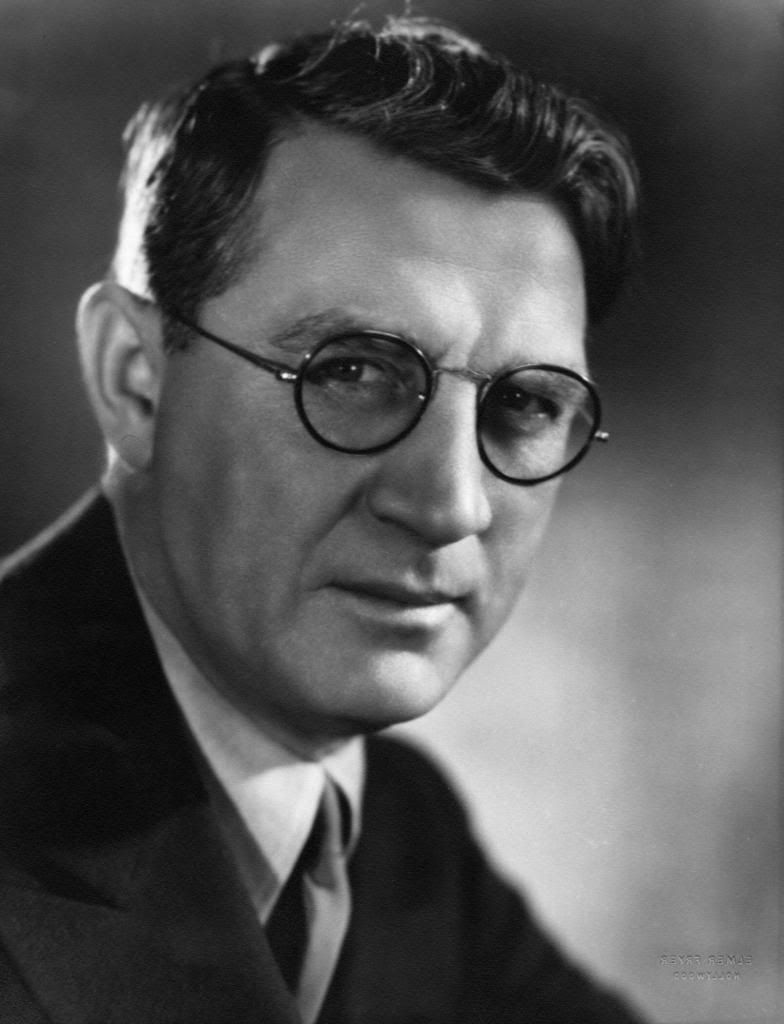
"I see that the public gets action. Some others may use motion pictures as a vehicle for a psychological study. I haven't that patience." -- Lloyd Bacon
One of classical Hollywood's contract director with a solid craftsmanship and great sense of economic in execution, Lloyd Bacon, was a prolific man of action, comedy and other fast-paced Warner dramas for nearly four decades. He virtually made 100 films that regardless of their varied qualities always convey that swinging pace associated with Warner' "tough" pictures and beyond. If one carefully sieve a career of 100 films, she or he will definitely come out with five or more films for keeps. As in the Bacon's enduring filmography I found 42nd Street, Footlight Parade, Marked Woman, Brother Orchid, San Quentin, Moby Dick and the Invisible Stripes as examples of his great sense of timing, his eye for composition and flawless entertainment.
Lloyd Bacon's name usually evokes the memory of pre-code Hollywood and early talkies, as his best films were made during that era. However he is also one of the least exploitative figures of the pre-code films that might be mistaken for mediocrity. Aside from being one the best comedy/musical and action specialists on Warner lot, he was known for his good ability to guide actors, as some of the best films of Pat O’Brien, James Cagney and Ann Sheridan were tidily directed by Bacon.

Wednesday, 17 April 2013
John Ford in 12 Frames
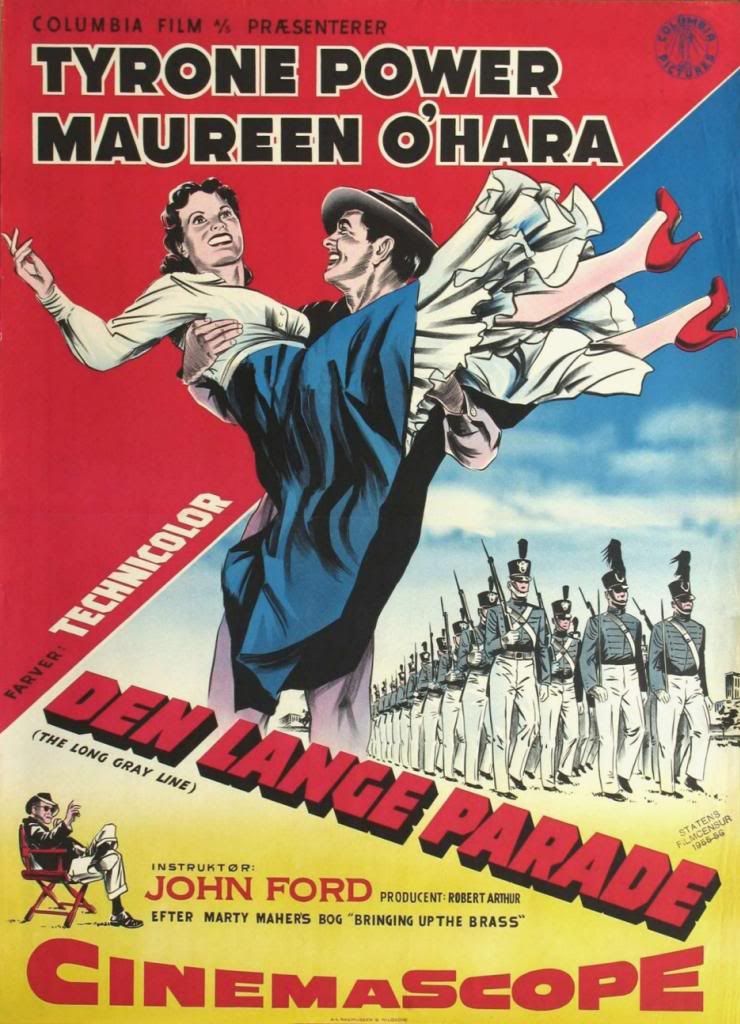
فورد در دوازده نما: صف طويل خاكستري
The
Long Gray Line
کارگردان: جان فورد؛ فیلمنامه: ادوارد هوپ؛
فیلمبردار: چارلز لاتون جونیور (و چارلز لنگ)؛ طراحان صحنه: رابرت پیترسون، فرانک
تاتل. 1955، تکنیکالر، سینمااسکوپ ( نسبت 2.55 به 1)، 138 دقیقه، استودیوی کلمبیا.
متوسط طول هر نما: 13 ثانیه. بازيگران: تايرون پاور (مارتين ماهر)، مورين اوهارا
(مري اودانل)، دانالد كريسپ (پدر مارتين)، وارد باند (هرمان كوهلر).
***
صفِ طویلِ خاکستری اولين فيلم اسكوپ جان
فورد و داستان نيم قرن از زندگي مارتين ماهر، مهاجر ايرلندي، در
پادگان آموزشي «وست پوينت» است و ماجراي زندگي او را از ورودش به «وست پوينت» ، به
عنوان ظرفشور، تا دوران افسري، ازدواج، مربيگري و در نهايت جنگ جهاني دوم نشان
ميدهد. اين فيلم كه يكي از تلخترين آثار فورد خوانده شده شايد تنها فيلم نظاميِ
غير وسترنِ او باشد كه تضاد بين زندگي سربازان با فرصتطلبي سياستمداران را با
صراحت كمسابقه و زباني گزنده روايت ميكند. در آن، تمام اجزاء واضح و حتي بديهي
به نظر ميرسند (ارتش، خانواده و مسئوليت فردي) اما در واقع يكي از معدود فيلمهاي
فورد است كه ريشهها را زير سؤال ميبرد؛ مرثيهاي است بر «روياي آمريكاييِ» يك
ايرلنديِ كاتوليك؛ مرثيهاي است كه فورد براي خودش و ديگراني مثل خودش سروده است.
Thursday, 11 April 2013
Film Ads In Iran#31: Elvis
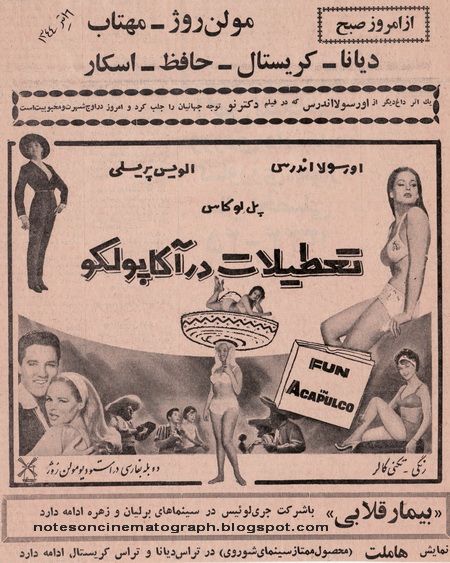 |
| Fun in Acapulco |
I was born in a family of six with two sisters close to my age who naturally became my playmates and fellow expeditionary. We discovered many things together and among the things we innocently loved there was Elvis. We had few Elvis films on VHS, but our favorite was a long anthology film of his Hollywood career, assembled and edited by Andrew Salt. Yes, the place was Islamic Republic of Iran and the time, 1990s when the country was slowly recovering from the devastation of a war.
Elvis Presley films were shown in Persian-dubbed version in the pre-revolutionary Iran, but there is no indication that he was as popular in Iran as other places in the world. The above picture and two more below are scans of Elvis film ads in Iran from that period.
To conceive what a weird and sometimes confusing melting pot was the film culture in Iran, I draw your attention to two other films promoted on the first ad (above), one for screening of Jerry Lewis' Leave It Up (who was bigger than Elvis or anyone else in Iran) and the other, quite surrealistically, promoting the Russian version of Hamlet by Grigory Kozinetsev which is indeed a masterpiece.
It can be interpreted as a sign of apathy toward the rock 'n' roll star, as the aforementioned ad introduces Fun In Acapulco as the Ursula Andress' new film ("who caught the world's attention by Dr. No," the ad reads) rather than leaning on Elvis as the major box-office drive of the film.
Monday, 8 April 2013
In Memoriam: Les Blank (1935-2013)
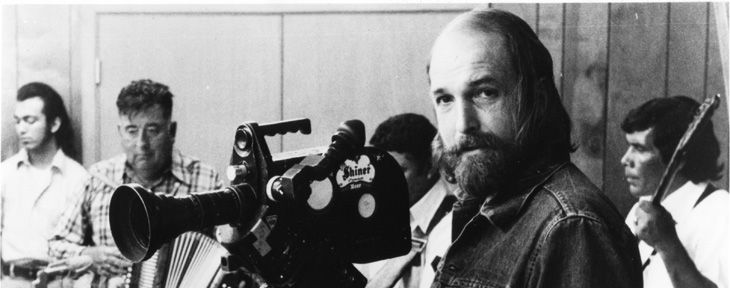
Les Blank, a fascinating individual and director of some remarkably personal documentaries passed away yesterday. I hardly have anything to say about him, at least worthy of his long and adventurous career, since I knew his ouvre only sporadically. However, I hope the stream of obituaries following his death would serve the purpose of shedding light on the career of the man "whose sly, sensuous and lyrical documentaries about regional music and a host of other idiosyncratic subjects, including Mardi Gras, gaptoothed women, garlic and the filmmaker Werner Herzog, were widely admired by critics and other filmmakers if not widely known by moviegoers."
Here, I'll draw your attention to one of Blank's very early films, which happens to be one of the best jazz films produced under the umbrella of independent, ciné-vérité movement of the 1960s. Les Blank made many films about music, including The Blues Accordin' to Lightnin' Hopkins (1968), of course if one doesn't mention incorporating jazz and blues music in his non-musical films. During five tireless decades of film-making, the portrait of Dizzy Gillespie stands out as probably one of Blank's most accomplished cinematographic discovery of music and musical ideas.
Saturday, 6 April 2013
Cobwebs


Image 1 (from the top) from Les aventures de baron de Munchhausen (Georges Méliès, 1911). Image 2 from The Great Gabbo (James Cruze, 1929). Image 3 from The Diabolical Dr. Z (Jesús Franco, 1966) and image 4 of Mari-Cookie and the Killer Tarantula (Franco, 1998).
Friday, 5 April 2013
Scorsese by Ebert (RIP Roger Ebert)

با اين وجود هميشه درسهايي براي يادگرفتن از ايبرت وجود
داشت، به خصوص اگر نوشتن براي روزنامه و يا مجلههاي با گرايشهاي عامهپسند
كارتان باشد. مثلاً طوري كه ايبرت داستان فيلم را بازگو ميكرد، هم داستان تعريف
كردن بود (كه از نظر من هميشه اتلاف كاغذ بوده) و هم تحليل (كه ايبرت آن را با
ظرافتي در خور انجام ميداد). او همچنين فيلمنامهنويس يكي از شوكهكنندهترين
فيلمهايي است كه در سالهاي جدي گرفتن علاقهام به سينما دادم، فيلمي با نام آنسوي
درۀ عروسكها، ساختۀ سلطان فيلمهاي «لُختي» مستقل آمريكايي، راس ماير. فيلمنامهاي
«كيچ»، هوشمندانه، بيپروا و مضحك كه مقدمهاي بود براي افسارگسيختگي هاليوود در
نمايش سكس.
در نهايت ميتوان به كتابهاي ايبرت اشاره كرد كه يكي از آنها،
اسكورسيزي به روايت ايبرت، در ايران چاپ شده و من مقدمهاي براي انتشار آن
در زمستان 1389 نوشتم كه قبلاً در اين وبلاگ منتشر شده و به مناسبت مرگ ايبرت
دوباره آن را تكرار ميكنم:
Subscribe to:
Posts (Atom)